Warehouse safety is becoming a measurable engineering priority in China’s rapidly expanding logistics sector. China installed 276,288 industrial robots in 2023, representing 51% of global installations, according to the International Federation of Robotics’ World Robotics 2024 report. This figure mainly covers industrial robots, not every warehouse system. Still, it shows the scale of automation investment.
The real question is how to improve warehouse safety through automation without creating new hazards. Automated storage and retrieval systems, autonomous mobile robots, conveyor sensors, machine vision, and warehouse software can reduce lifting, walking, and forklift exposure. They can also detect blocked aisles, unstable pallets, and unsafe access zones. The MHI Annual Industry Report 2024 found that 55% of supply chain professionals were increasing technology investment. However, technology alone does not guarantee safer work.
Safety depends on layout, training, maintenance, emergency controls, and practical worker feedback. A robot stopping beside a loading door may appear efficient, yet it can obstruct evacuation or pedestrian movement. A camera may identify a fallen carton but miss a damaged rack beam. Small failures matter. The U.S. Occupational Safety and Health Administration reports that forklifts cause about 85 fatal accidents and 34,900 serious injuries annually in the United States. This guide examines China’s top ten warehouse automation solutions through a safety-focused lens. It considers proven use cases, measurable risk reduction, system limitations, and installation realities. Some rankings remain debatable. That is intentional. Responsible automation requires evidence, not impressive demonstrations.
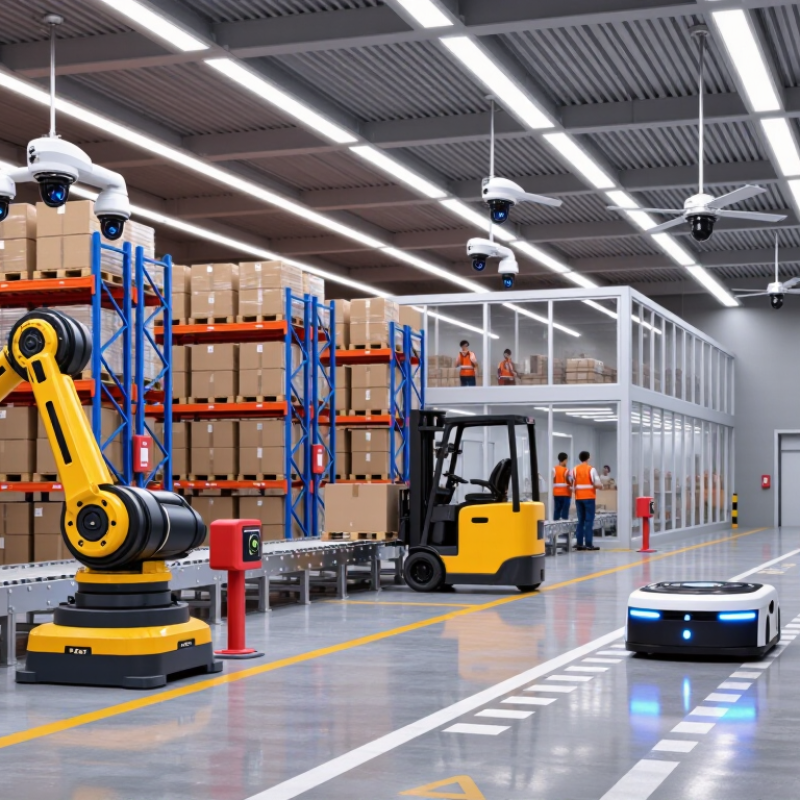
Warehouse automation in China is changing how safety is managed on busy warehouse floors. Automated storage systems can reduce manual lifting, repetitive walking, and exposure to moving forklifts. They also support more consistent inventory movement during peak periods.
Safety begins with physical design. Separate pedestrian lanes should use clear barriers, floor markings, and warning lights. Sensors can slow equipment near crossings. Emergency stops must remain visible and reachable. A worker should not need to search behind stacked cartons. Good systems also record near-misses, not only injuries. That detail matters.
However, automation is not automatically safe. Poorly planned routes may create blind corners and unexpected traffic. Software faults can stop an entire aisle. Workers still need practical training, equipment inspections, and clear maintenance procedures. In my assessment, some facilities focus heavily on installation speed. That can leave weak points around loading docks and manual packing stations. China’s warehouses should align automation plans with local safety requirements, worker feedback, and regular risk reviews. The human role is smaller, but never absent. Even a minor sensor delay deserves investigation.
Assessing safety in warehouse automation systems requires more than checking emergency-stop buttons. A practical review begins with a task-based risk assessment. Examine conveyors, autonomous mobile robots, lifts, scanners, and loading zones separately. Identify collision, crushing, falling-load, unexpected-start, and battery-related hazards. Observe real work, not only the design drawings. A narrow aisle may appear safe until two vehicles meet during a busy shift.
Tips: Check physical guarding, access doors, light curtains, warning signals, and emergency stops. Test them under normal and fault conditions. Confirm that safety controls follow suitable standards, such as ISO 12100 and ISO 13849. Review sensor placement, stopping distances, software validation, maintenance records, and operator training. Keep evidence in dated inspection logs.
Safety also depends on how people interact with the system. Workers need clear routes, visible status lights, and simple recovery instructions after a jam. Maintenance staff should use controlled isolation procedures before entering hazardous areas. A risk assessment must be updated after layout changes, software updates, or repeated near misses. Perfect safety claims are unrealistic. Even a well-designed system can fail through poor training, rushed repairs, or ignored alarms. A mature assessment therefore measures both technical protection and daily behavior. The strongest evidence comes from tests, records, interviews, and observed performance.
China’s leading warehouse safety programs combine ten practical technologies. These include autonomous mobile robots, automated storage and retrieval systems, conveyor controls, pallet shuttles, and robotic picking arms. Pick-to-light and voice guidance reduce search errors. Barcode and RFID tracking improve product visibility. Warehouse management software coordinates tasks, while machine vision checks packages and restricted zones. Safety sensors and predictive maintenance help prevent collisions and equipment failures.
In a busy distribution center, a robot can move totes along marked routes instead of asking workers to carry heavy loads. Speed limits, emergency stops, warning lights, and pedestrian barriers create visible separation. Vision systems can detect a person near a moving conveyor and trigger a controlled stop. Digital task allocation also reduces unnecessary walking, lifting, and repeated handling. These details matter during night shifts, when fatigue can weaken attention.
Automation is not automatically safe. Poorly designed routes may create bottlenecks. Incomplete training can make advanced equipment risky. Managers should test each system with real workers, record near misses, and review maintenance data regularly. Human supervision remains essential. A sensor may fail. Software may misread an unusual package. Safer operations depend on layered controls, clear procedures, and honest inspections, not technology alone.
Warehouse safety improves when machines remove predictable exposure, not when managers simply add more equipment. In China’s busy distribution centers, ten automation solutions target different hazards. Automated storage and retrieval systems keep workers away from high racks and falling-load zones. Conveyors reduce manual carrying, while guarded transfer points limit pinch injuries. Autonomous mobile robots follow mapped routes, lowering collisions caused by rushed cart movement. Yet blocked aisles can confuse them.
Pallet shuttles reduce forklift travel inside dense lanes, and robotic palletizers reduce awkward lifting. Vision inspection detects damaged cartons before they become unstable stacks or trip hazards. Inventory drones check upper locations without sending employees onto ladders.
Automated sortation directs parcels consistently, reducing manual throwing and repetitive strain. Dock levelers and vehicle restraints help prevent gaps, rollaways, and unexpected trailer movement. These controls work best when maintenance logs, emergency stops, and daily inspections are visible. Small failures matter.
Safety software can slow traffic near loading zones and record near misses for review. Wearable alerts may warn about proximity, fatigue, or restricted areas, but privacy and accuracy require careful governance. From an operational perspective, I would test each system during peak volume, not only in demonstrations. A sensor covered with dust can change a safe route into a blind one. Managers should measure incidents, near misses, blocked paths, and recovery time. People still matter. Automation reduces exposure, but it does not replace competent supervision or clear escape routes. That gap deserves attention.
China’s warehouse automation market is growing, but safer deployment requires more than selecting the fastest system.
OSHA reports that powered industrial trucks cause about 85 fatal accidents and 35,000 serious injuries annually in the United States. Poor training contributes to roughly one-quarter of these incidents. This figure should influence every site assessment.
Choose systems by risk, not marketing claims. Map pedestrian routes, blind corners, loading bays, and emergency exits before purchasing equipment. Automated mobile units need speed limits, obstacle detection, safe stopping distances, and clear warning signals.
ISO 3691-4 offers useful guidance for driverless industrial trucks. Local Chinese safety requirements must also be checked.
Deployment should begin with one controlled zone. Record near misses, stopping performance, sensor failures, and worker feedback.
MHI’s 2024 Annual Industry Report notes that 83% of supply-chain professionals expect technology investment to increase within five years. Investment without governance can create faster problems.
A trained safety owner should review software updates, battery charging, maintenance logs, and access permissions. No dashboard replaces judgment.
The first design may be wrong. That is normal.
Adjust traffic rules after observing real shifts, not only simulation results. Keep manual override controls visible and tested. Use physical barriers where software cannot guarantee separation.
In China, a strong system should also support local-language instructions, clear warning labels, and practical operator training. Safety improves when workers can understand, challenge, and safely stop the machine.
Review conveyors, mobile robots, lifts, scanners, and loading zones separately. Look for collisions, crushing points, falling loads, unexpected starts, and battery hazards. Observe real shifts. Drawings can miss crowded aisles.
Check guards, access doors, light curtains, warning lights, and emergency stops. Test them during normal operation and simulated faults. A button that works once is not enough.
Test systems during peak volume, not only quiet demonstrations. Watch two vehicles meeting in a narrow aisle. Record blocked paths, stopping distances, near misses, and recovery times.
Storage machines keep workers away from high racks and falling-load areas. Conveyors reduce manual carrying. Guarded transfer points help prevent pinch injuries.
Use dock levelers, vehicle restraints, visible warning signals, and clear pedestrian routes. These controls reduce gaps, rollaways, and unexpected trailer movement. Small failures still matter.
Start in one controlled zone. Measure sensor failures, stopping performance, near misses, and worker feedback. The first layout may be wrong. Adjust it after observing real work.
Provide simple recovery steps for jams, visible machine-status lights, and clear escape routes. Maintenance workers need controlled isolation procedures before entering hazardous areas. Instructions should use understandable local language.
Review it after layout changes, software updates, repeated near misses, or major equipment repairs. Check maintenance records, access permissions, battery charging, and operator training. Do not rely on dashboards alone.
No. Automation reduces exposure, but people still manage exceptions and unsafe conditions. A dusty sensor may create a blind route. Wearable alerts can help, but privacy and accuracy need careful review.
This article explores how to improve warehouse safety through automation in China by examining the role of intelligent systems in reducing workplace risks. It explains how automated storage, robotic transport, conveyor controls, machine vision, smart sensors, warehouse management software, automated picking, inventory monitoring, safety interlocks, and emergency response systems can support safer and more consistent operations. Instead of replacing safety management, these technologies help reduce manual lifting, limit unnecessary movement, identify hazards early, and improve coordination between people and equipment.
The article also presents practical methods for assessing warehouse automation systems, including reliability, emergency controls, worker interaction, system visibility, maintenance requirements, and compliance with applicable safety standards. It compares ten solution types according to the risks they address and explains how each can improve traffic control, load handling, order accuracy, and emergency preparedness. Finally, it provides guidance on selecting and deploying the right system through risk assessment, phased implementation, employee training, regular inspections, and continuous performance improvement.

JK Logistics