China Top Warehouse Automation What It Is and How It Works

Time:2026-11-04 Author:Oliver
0%

China’s logistics networks are under pressure to move more goods, faster, while managing labor, space, and delivery costs. Automation offers practical tools, from barcode scanners and conveyor belts to autonomous mobile robots and automated storage systems. The right setup depends on the warehouse’s size, order patterns, and existing software. There is no single best system.

So, what is warehouse automation and how does it work? In simple terms, it uses equipment and software to handle or coordinate tasks such as receiving, storing, picking, sorting, and shipping. A warehouse management system assigns work; sensors and scanners track inventory; machines move goods between stations. Picture a tote traveling from a storage rack to a packing bench, with its location updated along the way. Small details matter.

Industry data points to rising investment, but needs careful interpretation. MHI’s 2024 Annual Industry Report found that 55% of surveyed supply chain professionals planned to increase investment in supply chain innovation, while 88% expected technology spending to rise over five years. These figures cover survey respondents, not China warehouses alone. Separately, the International Federation of Robotics reported 276,288 industrial robot installations in China in 2023. That signals a strong robotics ecosystem, but industrial robots are not the same as warehouse systems.

This guide explains core technologies, operating workflows, and factors to compare when assessing leading warehouse automation providers in China. It also looks at integration, maintenance, and worker training. Automation can improve throughput. It can also create new bottlenecks when software, equipment, or processes do not fit together. That part deserves more attention.
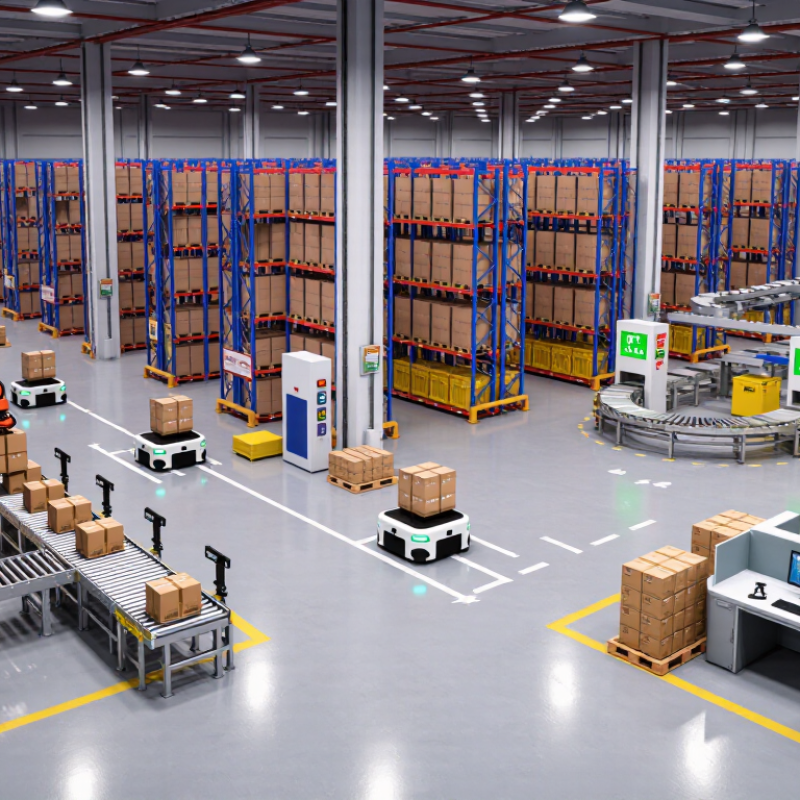
China Top Warehouse Automation What It Is and How It Works

What Warehouse Automation Means in China

In China, warehouse automation means coordinating storage, movement, and order handling through software and machines. A typical site may combine barcode scanning, warehouse-management software, conveyors, and autonomous mobile robots. Larger facilities can add automated storage and retrieval systems. These tools help workers locate goods, replenish shelves, and prepare orders with fewer manual handoffs. The need is substantial: China’s State Post Bureau recorded 132.07 billion express parcels in 2023. That figure reflects pressure on logistics networks, though parcel volume alone does not prove every warehouse needs automation.

Industry data offers useful context, but it needs careful interpretation. The International Federation of Robotics’ World Robotics 2023 report recorded 290,258 industrial robot installations in China in 2022. This covers industrial robots broadly, not warehouse systems specifically. Still, it shows the wider manufacturing environment in which automation investment is growing. In practice, Chinese warehouses often begin with a bottleneck: a crowded picking aisle, slow replenishment, or a dock that struggles during peak shifts. Full automation can be costly, and integrating old software is rarely smooth. That part is easy to underestimate.

Tips: Map order flows before buying equipment. Measure walking time, picking errors, and peak-hour throughput for several weeks. Start with one repeatable process, then compare results against a manual baseline. Small steps matter. Also ask whether staff can safely intervene when a robot pauses; plans look neat on paper, but real operations are messier.

Core Technologies Behind China's Automated Warehouses

Core Technologies Behind China’s Automated Warehouses

Automated warehouses combine software, machines, and sensors into one coordinated flow. A warehouse management system releases orders; execution software assigns tasks to conveyors, robotic shuttles, and autonomous mobile robots. Storage cranes place totes in narrow racks, while barcode or vision systems check labels and locations. Small details matter: a misplaced carton can block a lane or send a picker to the wrong aisle. Control is the quiet core.

China’s wider automation growth provides useful context. The International Federation of Robotics’ World Robotics 2024 report says China installed 276,288 industrial robots in 2023, or 51% of global installations. This figure covers industrial robots, not warehouse equipment alone.

MHI’s 2024 Annual Industry Report found that 55% of respondents planned to adopt robotics and automation within five years. Sensors and warehouse software help teams spot congestion and adjust routes, but integrations still fail when inventory data is stale. A digital twin can model a shift before changes reach the floor. It is useful, not magic: real layouts, damaged packaging, and human judgment remain difficult to simulate.

How Goods Move Through an Automated Warehouse

An automated warehouse moves goods through connected steps, from receiving to dispatch. At the inbound dock, staff unload cartons onto a conveyor or place pallets at a transfer point. Scanners read labels and check each item’s identity. Warehouse software assigns a storage location based on size, stock levels, and demand. A shuttle, lift, or mobile robot then carries the goods to a rack. The route can vary.

When an order arrives, the system directs equipment to retrieve the required items. Goods travel to a picking station, where workers or robotic arms confirm quantities. Conveyors carry picked items to sorting and packing areas. A sorter may divert each parcel into a lane for its destination. At shipping, staff scan parcels again before loading them onto a vehicle. Small delays can still build up at busy handoff points. Automation is not magic; poor labels or blocked aisles can disrupt the flow.

Tips: Keep labels clear and facing outward. Watch for queues near packing stations, not just robot speed. Test unusual carton sizes before expanding automation. A tidy process helps, though real warehouses rarely stay perfectly tidy.

Types of Warehouse Automation Systems Used in China

Warehouse automation in China combines software, storage equipment, and mobile machines to move goods with less manual handling. The right system depends on order volume, product size, building height, and delivery deadlines. A compact city warehouse may need a different layout from a large distribution center near a port.

Automated storage and retrieval systems place cartons or pallets into tall racks and retrieve them when needed. Shuttle systems use small vehicles to carry totes through storage lanes, which can help when many orders contain small items. Goods-to-person stations bring bins to workers, reducing long walks. The operator still checks labels and handles exceptions. Small details matter.

Conveyors and sorters route parcels toward packing or dispatch areas, often using barcode scans to identify destinations. Automated guided vehicles follow planned routes, while autonomous mobile robots can navigate around changing obstacles. Warehouse software assigns tasks and tracks inventory, but poor data can send a robot to an empty shelf. That part is easy to underestimate.

Many facilities combine several system types rather than automate every step. Older buildings may have uneven floors, narrow aisles, or limited charging space, so a technically capable system can still perform poorly there. A careful site survey and a small-scale trial reveal issues early. The first design is rarely perfect.

China Top Warehouse Automation: What It Is and How It Works — Types of Warehouse Automation Systems Used in China
System Type How It Works Common Warehouse Uses Typical Equipment or Software Key Operational Benefits Planning Considerations
Conveyor and Sortation Systems Motorized belts, rollers, or other conveying equipment move cartons and totes between work areas. Sorters route items to designated destinations using order or shipment information. Parcel hubs, e-commerce fulfillment, distribution centers, and production warehouses with predictable item flows. Conveyors, barcode or vision scanners, diverters, chutes, and a warehouse control system. Reduces manual transport over fixed routes and supports continuous movement and order sorting. Works best where routes and volumes are relatively stable. Requires suitable building space, safety provisions, and maintenance access.
Pallet Automated Storage and Retrieval Systems (AS/RS) Automated cranes or shuttles store and retrieve pallet loads in high-density rack structures under software control. High-bay storage, manufacturing supply, cold-chain facilities, and distribution centers handling palletized inventory. Storage racks, stacker cranes or pallet shuttles, load-handling equipment, and warehouse management and control software. Uses vertical space efficiently and can reduce routine forklift travel within the storage area. Needs careful assessment of building height, floor capacity, pallet standards, fire protection, and recovery procedures.
Miniload AS/RS Automated cranes or shuttles retrieve totes, bins, or cartons from compact storage locations and deliver them to picking or replenishment stations. Parts distribution, electronics, pharmaceuticals, and other operations with many small-item stock-keeping units. Miniload cranes or shuttles, tote or carton storage, workstations, and inventory-control software. Provides dense small-item storage and can reduce search and travel time for order picking. Container dimensions, product handling rules, order profiles, and peak demand should be checked before system sizing.
Shuttle-Based Storage Systems Shuttles travel within storage lanes or levels to move totes, cartons, or pallets to retrieval points. Some designs connect multiple levels with lifts. High-throughput fulfillment and buffer storage where a large number of storage locations must be accessed. Storage lanes, autonomous shuttles, lifts, transfer equipment, and warehouse control software. Can support dense storage and parallel item movement, depending on system design and order patterns. Capacity depends on shuttle count, lifts, layout, and replenishment strategy. Maintenance and equipment recovery plans are important.
Automated Guided Vehicles (AGVs) Vehicles follow defined routes or guidance systems to transport pallets, carts, or other loads between warehouse locations. Repetitive material transfers between receiving, storage, production, and dispatch areas. Guided vehicles, navigation or guidance infrastructure, traffic-management software, and charging equipment. Automates repeatable transport tasks and can reduce reliance on manual vehicle movement along established routes. Route changes, pedestrian interaction, floor conditions, load dimensions, and traffic management affect suitability.
Autonomous Mobile Robots (AMRs) Mobile robots use onboard sensors and maps to navigate between assigned locations, with routes that can adapt to changing obstacles and workflows. Piece-picking support, tote movement, replenishment, and flexible transport in fulfillment and light-industrial operations. Mobile robots, fleet-management software, docking or charging stations, and interfaces to warehouse systems. Can be introduced for selected workflows without installing fixed conveying routes throughout the facility. Requires safe traffic design, reliable wireless coverage, suitable floor conditions, and integration with task-allocation software.
Goods-to-Person Picking Automated storage equipment brings inventory containers or shelves to stationary picking operators, who pick items for orders. Piece-picking operations with frequent orders, small products, or high walking distances. Automated storage and retrieval equipment, pick stations, order displays or scanners, and inventory software. Reduces operator walking and presents items at organized workstations. Performance depends on order mix, replenishment, workstation design, and how quickly inventory can be delivered to stations.
Robotic Piece Picking and Depalletizing Robotic arms use grippers and sensing systems to identify and handle selected cases or individual items in defined tasks. Carton handling, pallet unloading, order consolidation, and selected piece-picking applications. Industrial or collaborative robots, end effectors, cameras or other sensors, safety equipment, and task-control software. Can automate repetitive handling tasks and support consistent operations in applications with suitable products. Product variation, packaging, graspability, presentation, and exception handling determine whether a task is suitable.
Warehouse Management, Execution, and Control Software Software assigns inventory locations and work, coordinates material-flow equipment, and exchanges order and status data with business systems. Facilities combining manual processes with automated equipment, or coordinating multiple automation subsystems. Warehouse management systems, warehouse execution systems, warehouse control systems, and enterprise-system interfaces. Connects inventory and order processes with equipment tasks, improving visibility and coordination. Clear system responsibilities, data quality, interface testing, cybersecurity, and contingency procedures are essential.

Key Applications and Benefits of Warehouse Automation in China

China Top Warehouse Automation: What It Is and How It Works

Key Applications and Benefits of Warehouse Automation in China

Warehouse automation combines software, sensors, and equipment to move, store, and track goods with less manual handling. In China, common applications include automated storage and retrieval systems, conveyor lines, sorting equipment, and autonomous mobile robots. These tools can support busy e-commerce hubs, cold-chain facilities, and factories handling frequent small orders.

The International Federation of Robotics’ World Robotics 2024 report recorded 276,288 industrial robot installations in China in 2023, or 51% of global installations. This figure covers industrial robots broadly, not warehouse systems alone, but it shows the scale of the country’s robotics ecosystem.

Automation can shorten pick routes, improve inventory visibility, and reduce repetitive lifting. A shuttle system can bring a tote to a picker, while scanners update stock records at each handoff. Results depend on layout, order patterns, and integration with warehouse management software; automation does not fix inaccurate inventory or poor processes.

Some sites still struggle with mixed product sizes. That matters.

Tips: Start with one measurable bottleneck, such as missed scans or slow replenishment. Record current throughput and error rates, then run a small pilot before expanding. Human review remains useful for exceptions and equipment downtime.

FAQS

What technologies power automated warehouses in China?

Warehouse software coordinates conveyors, storage cranes, shuttles, and mobile robots. Scanners and vision systems check labels and locations.

How do goods move through an automated warehouse?

Staff unload cartons at a dock, where scanners identify them. Software assigns storage locations, and machines carry goods to racks. Orders later travel to picking, packing, sorting, and dispatch areas.

What does warehouse software do?

It tracks inventory and assigns tasks to equipment. If stock data is outdated, a robot may arrive at an empty shelf. That can slow the whole flow.

What is the difference between shuttles and mobile robots?

Shuttles carry totes through storage lanes. Mobile robots move along routes or navigate around changing obstacles. The best choice depends on the building and goods.

Do automated warehouses remove the need for workers?

No. Workers may unload cartons, check picked quantities, handle exceptions, and load vehicles. Machines reduce some manual movement, but people still make judgments.

How can a digital twin help warehouse teams?

It can model a shift before layout or route changes reach the floor. Useful, but not magic. Damaged packaging and human decisions remain hard to simulate.

What should teams check before installing automation?

Survey floor conditions, aisle widths, building height, and charging space. Test unusual carton sizes, too. The first design is rarely perfect.

How can teams prevent everyday delays?

Keep labels clear and facing outward. Watch queues near packing stations, not only robot speed. A blocked aisle can disrupt several handoffs. Real warehouses are rarely tidy.

Conclusion

Warehouse automation in China uses connected equipment, software, and data to manage the movement and storage of goods with less manual handling. To understand what is warehouse automation and how does it work, consider a typical flow: incoming goods are identified and recorded, then directed to storage locations; when an order arrives, the system finds the required items, coordinates retrieval, and sends them to packing and dispatch. Sensors and control software help equipment and workers coordinate each step and track inventory.

Common systems include automated storage and retrieval equipment, conveyors, sorting systems, mobile robots, and warehouse management software. These technologies can be combined according to a facility’s size, products, and operating needs. In China, automated warehouses support applications such as e-commerce fulfillment, manufacturing supply, and cold-chain logistics. By improving inventory visibility, using space efficiently, and reducing repetitive tasks, automation can help increase speed, accuracy, and consistency while supporting safer, more flexible warehouse operations.

Oliver

Oliver

Oliver is a seasoned marketing professional with a wealth of expertise in driving brand awareness and engagement. With a deep understanding of our company's product offerings, he consistently delivers high-quality content that enriches our professional blog. His insights not only shed light on......