Modern warehouses are no longer simple storage buildings. They are pressured to move faster, forecast better, and make fewer mistakes. The question “what challenges do modern warehouses face” now reaches every aisle, dock, and software dashboard. A late inbound truck can leave pickers waiting. A misplaced barcode can delay an entire customer order. Labor shortages make these small failures more expensive.
The 2024 MHI Annual Industry Report found that 55% of supply chain leaders planned to increase technology investment. It also identified artificial intelligence, robotics, and advanced analytics as major priorities. Zebra Technologies’ 2023 Warehousing Vision Study reported that 58% of warehouse decision-makers expected to modernize operations by 2028. These figures show strong momentum, but investment alone does not solve operational confusion. Poor data, disconnected systems, and weak process design can make new technology another obstacle.
As warehouse technology analyst Dwight Klappich has observed, “The warehouse is the heart of the supply chain.” That heart must respond to volatile demand, tighter delivery promises, and rising energy costs. Yet automation is not always the best first answer. A conveyor cannot repair inaccurate inventory records. A robot cannot clarify an unclear receiving procedure. The practical challenge is balance: people, equipment, data, and space must work together. Some warehouses may need less technology, not more. They may need cleaner layouts, better training, and honest performance measurements first. That uncomfortable reflection is often where reliable modernization begins.
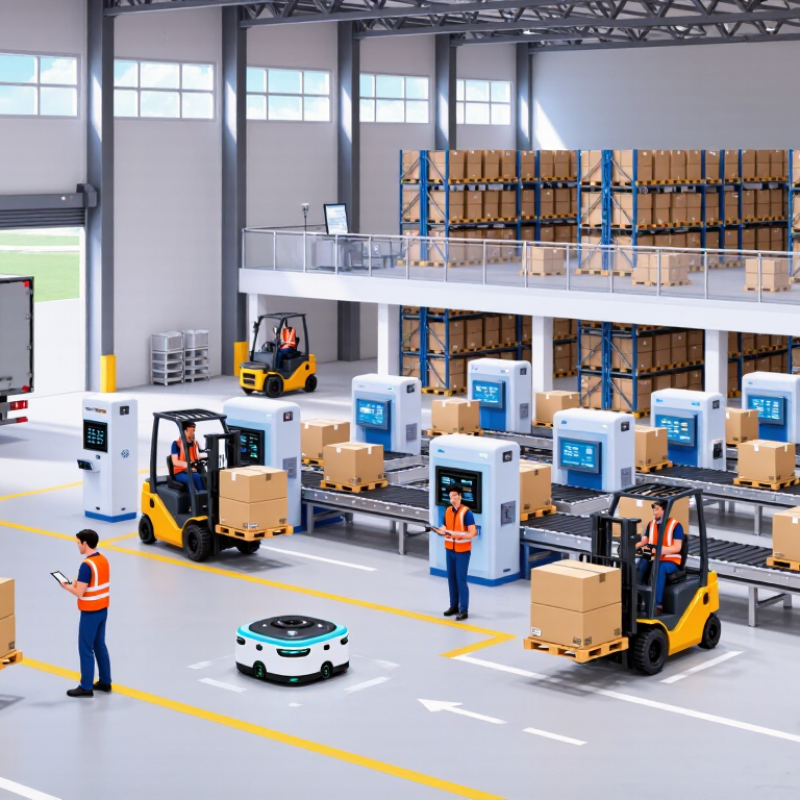
U.S. online sales reached approximately $1.19 trillion in 2024, according to Census Bureau estimates. That growth places constant pressure on modern warehouses. Customers expect fast delivery, accurate orders, and simple returns. Meanwhile, demand can change sharply after a promotion, holiday, or unexpected trend.
In warehouse assessments, I often see congestion near packing stations. Workers may walk long distances for popular items. Small delays then spread across receiving, picking, and shipping. Inventory accuracy becomes harder when products move quickly. Technology can help, but poor data still creates poor decisions. That lesson is easy to overlook. Labor planning also needs flexibility, especially during sudden volume increases. A warehouse designed for average demand may struggle during peak weeks.
Tips: Map the busiest walking routes each month. Place high-demand items closer to packing areas, but review safety risks first. Use cycle counts instead of waiting for one large annual check. Track order accuracy, picking time, and return reasons together. These measures reveal problems that a single productivity number can hide. Test layout changes in one zone before expanding them. Not every efficient-looking change works in practice.
Warehousing employed nearly 1.9 million U.S. workers in recent years, according to U.S. Bureau of Labor Statistics data. That scale makes labor availability a critical operational issue. Many facilities still struggle to fill picker, packer, forklift, and maintenance roles. Demand peaks can arrive suddenly, while training takes weeks. New employees may learn procedures beside moving equipment, crowded aisles, and constant time pressure. The process is practical, but not always comfortable.
Safety remains equally serious. BLS reported 4.8 recordable injuries and illnesses per 100 full-time workers in transportation and warehousing during 2023. The private-industry average was 2.4. Repetitive lifting, awkward reaches, vehicle traffic, and poor recovery time can turn small mistakes into lasting injuries. OSHA continues to identify struck-by incidents, material handling, and ergonomic risks as major warehouse concerns. Data is useful here, though it does not show every near miss.
A safer facility needs more than posters and annual training. Managers should observe real workstations, measure walking distances, and review near-miss reports without blaming employees. Simple changes matter: clearer pedestrian lanes, adjustable packing surfaces, scheduled equipment checks, and realistic productivity targets. Automation may reduce physical strain, but it cannot replace sound supervision. Some warehouses still treat speed as the main performance measure. That assumption deserves reconsideration. Availability of workers matters, but keeping them healthy matters longer.
Modern warehouses are facing a practical shortage of usable space. U.S. industrial vacancy reached 6.4% in Q4 2024, according to recent market data. That figure may suggest relief for tenants, but empty space is not always suitable space. A vacant building might have low ceilings, narrow loading areas, or poor access to major transport routes. Some facilities also lack enough power for automated equipment and temperature-sensitive operations.
Space pressure remains visible inside active warehouses. Pallets can crowd travel lanes, while seasonal inventory occupies staging areas for weeks. A team may lease additional square footage, yet still lose efficiency through long walking distances. Higher vacancy can also create uncertainty for property owners. They may need to improve lighting, loading docks, fire systems, or floor layouts before attracting reliable tenants. These upgrades require capital, permits, and careful scheduling.
From an operational perspective, better measurement matters. Managers should track storage density, dock usage, picking time, and unused vertical space. A simple floor survey can reveal blocked aisles or racks holding slow-moving goods. It is tempting to add more shelving immediately. That choice can backfire when emergency access becomes limited. We also should question whether every warehouse needs maximum density. A safer layout may support faster work, even when it stores fewer pallets. This trade-off is often underestimated.
What Challenges Do Modern Warehouses Face?
Automation complexity is becoming a central warehouse challenge. The 2024 Annual Industry Report from a leading material-handling association projects AI adoption to reach 73% within five years. Current adoption remains much lower, at about 37%. This gap shows ambition, but it also exposes operational pressure.
AI needs clean data, stable networks, and trained employees. A warehouse cannot simply add cameras, robots, and software. Each system must exchange accurate information during receiving, picking, packing, and shipping. One incorrect inventory signal can send a worker to an empty location. That wastes minutes, then multiplies across thousands of orders.
The same report identifies labor challenges and supply-chain disruption as continuing concerns. Automation may reduce repetitive work, yet it does not remove management responsibility. Supervisors still need to review exceptions, safety events, and unreliable forecasts. The technology can be impressive.
However, many projects begin with unclear targets. A practical pilot should measure travel distance, picking accuracy, downtime, and training hours. These figures reveal whether automation improves work or merely moves complexity elsewhere. Human experience remains essential, especially when processes change faster than procedures. Some warehouses may also underestimate maintenance costs. That is a mistake worth admitting early.
| Challenge Area | Industry Adoption Today | Projected Adoption in Five Years | Increase | Why It Creates Complexity | Recommended Management Focus |
|---|---|---|---|---|---|
| Artificial Intelligence | 14% | 73% | +59 percentage points | AI must connect operational data, forecasting tools, labor planning, inventory systems, and automation controls while maintaining reliable data quality. | Begin with measurable use cases such as demand forecasting, slotting, exception detection, and predictive maintenance. Establish data governance before scaling. |
| Cloud Computing | 55% | 79% | +24 percentage points | Moving warehouse applications to connected platforms increases the need for cybersecurity, system integration, access controls, and dependable connectivity. | Define integration standards, backup procedures, cybersecurity controls, and service-level requirements for critical warehouse applications. |
| Sensors and Automatic Identification | 66% | 87% | +21 percentage points | Large volumes of barcode, radio-frequency, location, temperature, and equipment data can become inconsistent if devices and data definitions are not standardized. | Use common data structures, device-management procedures, calibration schedules, and clear ownership for data accuracy. |
| Robotics and Automation | 37% | 73% | +36 percentage points | Automated equipment must coordinate with warehouse processes, people, safety systems, material flow, and existing software rather than operate as isolated assets. | Map end-to-end workflows, test human-machine handoffs, maintain manual fallback procedures, and train employees before full deployment. |
| Inventory and Network Optimization | 36% | 76% | +40 percentage points | Optimization decisions depend on accurate inventory, order, transportation, capacity, and demand data across multiple warehouse processes. | Set shared performance definitions for inventory accuracy, order-cycle time, capacity utilization, service level, and forecast accuracy. |
| Industrial Internet of Things | 29% | 64% | +35 percentage points | Connected equipment increases the number of data sources and potential failure points, making interoperability, monitoring, and maintenance more demanding. | Prioritize interoperable equipment, real-time monitoring, condition-based maintenance, and documented incident-response procedures. |
Modern warehouses are becoming connected systems, not just buildings with shelves. Scanners, cameras, robots, and inventory platforms exchange data every minute. Each connection creates another path for attackers. A 2024 industry report placed the average data-breach cost at $4.88 million. For many operators, that figure is difficult to absorb.
Warehouse security assessments often find overlooked weaknesses near loading docks. Shared tablets may keep old passwords. Handheld scanners may remain logged in after a shift ends. A compromised supplier account can expose shipment records, employee details, or customer addresses. The damage may continue after systems are restored. Delayed deliveries can trigger penalties, lost trust, and expensive manual checks.
Simple controls still matter. Use separate accounts and require multifactor authentication for sensitive systems. Encrypt operational data during transfer and storage. Restrict vendor access by role, time, and location. Monitor unusual login times, repeated failed scans, and sudden inventory changes. Practice offline recovery with real staff, not only security software. That test may reveal gaps.
No warehouse is perfectly protected. That is worth admitting. Managers sometimes buy advanced tools before fixing basic access rules. A locked server room cannot compensate for an exposed password. Security teams should review incidents without hiding uncomfortable mistakes. Clear reporting, tested backups, and regular staff training reduce the chance that one small error becomes a multimillion-dollar disruption.
Average data-breach costs varied significantly by region in 2024. The global average reached $4.88 million, highlighting the financial exposure created by connected warehouse systems, operational technology, and sensitive logistics data.
Values are average total data-breach costs in millions of U.S. dollars, based on 2024 industry research.
U.S. online sales reached approximately $1.19 trillion in 2024. This growth increases warehouse pressure.
Promotions and holidays can sharply increase orders. A warehouse built for average demand may fail during peak weeks.
Map busy walking routes every month. Move popular items closer to packing stations after reviewing safety risks.
Products move quickly between receiving, picking, and shipping. Small counting errors can spread across many orders.
Use regular cycle counts instead of one annual check. The method is useful, though not perfect.
Track order accuracy, picking time, and return reasons together. One productivity number rarely shows the whole picture.
Warehousing employed nearly 1.9 million U.S. workers in recent years. Worker shortages can delay training and daily operations.
Common risks include repetitive lifting, awkward reaches, vehicle traffic, and limited recovery time. Near misses matter too.
Automation may reduce physical strain. It cannot replace supervision, realistic targets, or clear pedestrian lanes.
Test layout changes in one zone before expanding them. Some efficient-looking changes fail in real work.
What challenges do modern warehouses face? Today’s facilities must handle rapidly expanding e-commerce demand, with U.S. online sales reaching approximately $1.19 trillion in 2024. At the same time, labor shortages and workplace safety concerns continue to affect an industry employing nearly 1.9 million workers. Warehouses are also under pressure from limited and costly space, as the U.S. industrial vacancy rate reached 6.4% in the fourth quarter of 2024.
Another major challenge is the growing complexity of automation. Although artificial intelligence adoption in warehousing is projected to reach 73% within five years, companies must manage implementation costs, employee training, system integration, and operational reliability. Cybersecurity is equally important as warehouses become more connected and dependent on digital systems. A single data breach can create an average loss of $4.88 million, making stronger protection, regular monitoring, and careful risk management essential for maintaining efficient, safe, and resilient operations.

JK Logistics