China Top 10 Ways to Optimize Material Flow in a Warehouse?

Time:2026-11-11 Author:Amelia
0%

Warehouse performance depends on how smoothly goods move from receiving docks to storage, picking faces, packing stations, and dispatch. A pallet waiting in the wrong staging lane can block a forklift route. A picker taking unnecessary steps can slow every order behind it. Small delays compound. They also create congestion, extra handling, and avoidable inventory errors.

For warehouse managers asking how to optimize material flow in a warehouse, the answer starts with observing actual work, not simply redrawing a floor plan. The Zebra 2023 Global Warehouse Vision Study found that 87% of warehouse decision-makers planned to invest in technology to modernize operations by 2028. MHI’s 2024 Annual Industry Report likewise highlights growing investment in supply-chain innovation and automation. These reports point to a clear trend: better visibility and well-chosen technology matter. Yet technology alone cannot fix poor slotting or unclear travel paths.

China’s warehouses may handle dense urban deliveries, varied product mixes, and sharp demand swings. The right approach depends on the building, workforce, equipment, and order profile. There is no universal layout. Some improvements are modest: separating inbound and outbound staging, placing fast-moving SKUs near packing, or marking one-way vehicle routes. Others require data and careful testing. A useful plan measures travel distance, queue time, replenishment delays, and picking accuracy before and after changes. Results can be imperfect at first. That is worth admitting. This guide explores ten practical ways to improve flow, reduce avoidable movement, and build a safer, more responsive warehouse operation.
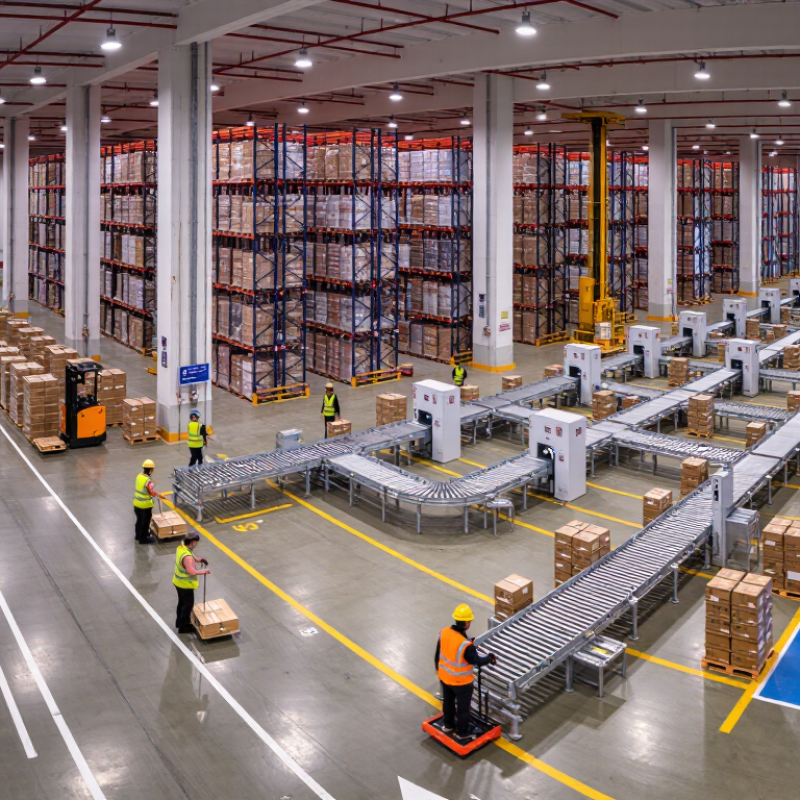
China Top 10 Ways to Optimize Material Flow in a Warehouse?

Assess Current Material-Flow Patterns and Warehouse Bottlenecks

Begin with a shift-level map, not a software dashboard. Follow one pallet from receiving to its final storage location, then trace a picked order to dispatch. Record walking distance, queue time, handoffs, and repeated touches. Include replenishment trips and blocked aisles; these often disappear from formal process maps. Small delays add up. Compare peak and quiet periods, since a layout that works at 10 a.m. may fail during afternoon order waves. Use timestamps and direct observation together, and note where estimates replace measured data.

Then test the suspected bottlenecks against operational records. The 2023 MHI Annual Industry Report found that 55% of respondents planned to increase investment in supply-chain innovation. That signals growing interest in improvement, not proof that automation will fix a specific warehouse. Tag each delay by cause: congestion, late replenishment, unclear locations, or uneven workload. Review order lines per labor hour alongside travel distance and queue duration; one metric alone can hide trade-offs. Do not assume the busiest aisle is the main constraint. Some observations will be imperfect, especially when workers change routes under pressure. Mark those gaps, repeat the walk, and compare findings with scan timestamps and shift notes.

Design Layouts for Direct, Uninterrupted Movement

A direct warehouse flow begins at the dock, not the picking aisle. In a Chinese distribution center, map the path from receiving to inspection, storage, picking, packing, and dispatch. Keep fast-moving goods near packing, and avoid sending pallets across pedestrian routes. Mark one-way travel lanes with clear floor lines; leave enough turning space for forklifts at rack ends. Small layout changes can remove repeated crossings, though a drawing alone will not reveal every daily obstruction.

MHI’s 2024 Annual Industry Report found that 55% of surveyed supply-chain professionals planned to increase technology investment. That figure is not proof that automation fixes poor layouts. Test proposed routes with a simple flow map and observe a busy shift before moving racks. Track travel distance per order, queue time at packing, and near-misses for several weeks. One awkward truth: a shorter route may create a bottleneck at a narrow doorway. Recheck after seasonal volume changes.

Tips: Use floor tape to trial new paths before permanent changes. Keep crossing points visible, label staging zones, and review congestion with operators who work those aisles. Their feedback may challenge the plan—and that is useful.

Improve Receiving, Storage, Replenishment, and Picking Processes

In a busy warehouse in China, material flow improves when each handoff has a clear location and owner. At receiving, separate scheduled deliveries from unexpected arrivals, then check labels and quantities before goods enter storage. A marked inspection area prevents cartons from blocking dock doors. Small delays matter. Record damaged packaging immediately, even when the cause seems obvious; assumptions can create inventory errors later.

Storage should match how items move, not just where space is available. Keep fast-moving products near suitable picking zones, while protecting clear aisle access for people and equipment. Replenishment triggers can use minimum stock levels, but review them after promotions or seasonal peaks. A threshold that worked last month may cause excess movement today. That is not always easy.

For picking, group orders by route or destination when the workflow allows it, and keep frequently picked items within comfortable reach. Use clear location labels and scan checks to reduce wrong-item picks. Track travel distance, replenishment delays, and picking accuracy together; improving one measure alone can hide new bottlenecks. Walk the process during a busy shift. The route on a layout may look efficient, yet a pallet waiting beside a narrow aisle can change everything.

China Top 10 Ways to Optimize Material Flow in a Warehouse? - Improve Receiving, Storage, Replenishment, and Picking Processes

The performance figures below are illustrative planning targets, not universal industry benchmarks. Actual results depend on product mix, order profile, layout, staffing, and operating hours.

Process Optimization Method Key Metric Example Baseline Illustrative Target How to Measure
Receiving Schedule inbound appointments and level arrivals across available dock doors. Average truck waiting time 45 minutes 20 minutes or less Record arrival-to-dock time for each inbound vehicle and review weekly averages.
Receiving Use advance shipment data and barcode scanning to verify items, quantities, and purchase orders at receipt. Receiving accuracy 97.0% 99.5% or higher Compare accepted receipt lines with the purchase order and count verified receipt lines.
Putaway Direct each received item to a suitable location using product dimensions, handling requirements, and demand. Dock-to-stock time 6 hours 4 hours or less Measure elapsed time from receipt confirmation to inventory becoming available in its storage location.
Storage Slot fast-moving products near dispatch or picking areas while respecting weight, size, and safety constraints. Average pick travel distance per order 650 meters 520 meters or less Use warehouse system location data or sampled route studies to estimate distance traveled per completed order.
Storage Set clear location labels and scan-directed location confirmations to reduce misplaced inventory. Location accuracy 96.0% 99.0% or higher Compare physical cycle-count results with the recorded on-hand quantity and location.
Replenishment Trigger replenishment from forward-pick locations before available stock falls below the planned pick-face minimum. Pick-face stockout rate 4.0% of pick lines 1.0% or less Count pick lines delayed or shorted because the assigned pick location has insufficient stock.
Replenishment Coordinate replenishment work with picking waves and prioritize urgent locations using task queues. Replenishment task completion time 40 minutes 25 minutes or less Measure time from replenishment task release to confirmed completion at the pick location.
Picking Group compatible orders into batches or zones to reduce repeated travel without compromising order accuracy. Pick travel distance per order 650 meters 520 meters or less Compare route distance for equivalent order profiles before and after the change.
Picking Use barcode confirmation at the item and order level, with clear exception handling for substitutions and shortages. Picking accuracy 98.5% 99.7% or higher Calculate correctly picked order lines as a percentage of all audited or shipped order lines.
Cross-process Flow Review congestion by aisle and time of day; separate pedestrian paths from equipment routes where practical. Congestion-related delay time 30 minutes per shift 15 minutes or less per shift Log blocked-aisle events and movement delays, then compare totals by shift and warehouse zone.

Apply Automation and Digital Tools to Coordinate Material Handling

Automation can improve warehouse flow only when it follows clear, reliable processes. Start with visibility. A warehouse management system can show where pallets are stored, while barcode scans confirm each move. For example, when a picker removes a carton from a rack, the scan updates its location before the next task is assigned. This small step can prevent workers from searching empty shelves.

Digital tools can also coordinate conveyors, mobile robots, and forklift tasks through shared priorities. Set rules around order deadlines, aisle congestion, and safe handoff points. If a packing station is backed up, the system can redirect incoming totes to another available station. Keep alerts specific; too many notifications soon become background noise.

There is a catch. Automation cannot correct inaccurate stock records or unclear aisle labels by itself. Test new workflows in one zone, then compare travel time, missed scans, and blocked routes with previous results. A pilot may reveal awkward exceptions that the original plan missed. Adjust the process before expanding, and keep a manual fallback for equipment outages. Not every movement needs automation; some low-volume tasks remain simpler by hand.

Track Performance and Refine Warehouse Flow Over Time

A warehouse flow map is only a snapshot. Track travel distance, dock-to-stock time, picking accuracy, and orders completed per labor hour each shift. Record results by zone and order type; a building-wide average can hide a congested packing lane or a slow replenishment aisle. Keep definitions consistent. Otherwise, yesterday’s numbers may not match today’s.

MHI’s 2024 Annual Industry Report found that 55% of surveyed supply chain leaders planned to increase technology investment. That signals interest, not guaranteed improvement. Compare any new scanner, routing rule, or conveyor change against a four-week baseline. WERC’s 2024 DC Measures report can also help teams frame operational comparisons with consistent warehouse metrics. Check whether your own order mix and shift patterns make a benchmark fair.

Look for repeated friction, not one bad hour. A picker waiting beside an empty forward bin is a useful clue: measure replenishment delays, then adjust the trigger or location. Review the dashboard weekly with operators who know the floor. Their observations may challenge the data. That is valuable. We may still miss a cause, so test one change at a time and keep a record of what failed, too.

FAQS

How should a warehouse team map material flow?

Follow one pallet from receiving to storage, then trace a picked order to dispatch. Record walking distance, queues, handoffs, and repeated touches.

Which delays should teams look for?

Check congestion, late replenishment, unclear locations, and uneven workloads. Include blocked aisles and replenishment trips. Small delays matter.

How can teams verify a suspected bottleneck?

Compare direct observations with scan times and shift notes. Repeat the walk during busy and quiet periods; routes may change under pressure.

What can improve receiving?

Separate scheduled deliveries from unexpected arrivals. Check labels and quantities before storage, and use a marked inspection area to keep cartons away from dock doors.

How should products be placed in storage?

Keep fast-moving items near suitable picking zones while preserving clear aisles. A layout that looks efficient may still fail when a pallet blocks the route.

How can replenishment delays be reduced?

Set minimum stock triggers, then review them after promotions or seasonal peaks. A threshold that worked last month may create extra movement today.

What helps improve picking accuracy?

Group orders by route or destination when practical. Use clear location labels and scan checks, and keep frequently picked items within comfortable reach.

Which performance measures should teams track?

Track travel distance, dock-to-stock time, picking accuracy, and orders completed per labor hour. Record results by zone and order type; averages can hide a slow aisle.

How should teams test a new process change?

Compare it with a four-week baseline and change one thing at a time. Review results with floor operators. We may still miss a cause.

Conclusion

Optimizing warehouse material flow starts with understanding how goods move through the facility. Assess current routes, handling steps, congestion points, and delays to identify bottlenecks. Then arrange work areas and storage locations to support direct, uninterrupted movement, reducing unnecessary travel and repeated handling. Clear pathways and thoughtful placement of frequently moved items can help create a smoother flow from receiving to dispatch.

A practical guide to how to optimize material flow in a warehouse also covers the daily processes that keep goods moving: receiving, putaway, replenishment, and picking. Standardized procedures, coordinated automation, and digital tools can improve visibility and help teams make timely decisions. Finally, track measures such as travel time, throughput, and order accuracy. Reviewing these results regularly allows warehouse teams to identify new constraints, refine processes, and sustain efficient material movement as needs change.

Amelia

Amelia

Amelia is a seasoned marketing professional with a wealth of expertise in our company’s core offerings. With an unwavering passion for driving growth and innovation, she plays a pivotal role in shaping our marketing strategies and enhancing brand visibility. A key aspect of her responsibilities......