Why is real time inventory movement important? The answer becomes clear when a picker reaches an empty bin, while the system still shows twelve units. That mismatch can delay an order, trigger unnecessary replenishment, or leave staff searching aisle by aisle. Live movement records help teams see what was received, picked, transferred, or returned—and when it happened. Small updates matter.
Toyota Production System pioneer Taiichi Ohno wrote, “All we are doing is looking at the time line, from the moment the customer gives us an order to the point when we collect the cash. And we are reducing that time line by removing the non-value-added wastes.” His focus was broader than inventory tracking, but the principle applies: timely, reliable information can help expose avoidable waiting and rework. In practice, that means scanning a pallet at receipt, recording a bin transfer immediately, and checking exceptions before they become stockouts.
Real-time visibility is not magic. A fast dashboard built on missed scans can still mislead people. Processes, devices, and staff training all matter. So does reviewing discrepancies instead of quietly correcting them and moving on. That part is easy to neglect. This article explores how real-time inventory movement supports accuracy, service, and better decisions, while also examining its limits and the practical steps required to make the data trustworthy.
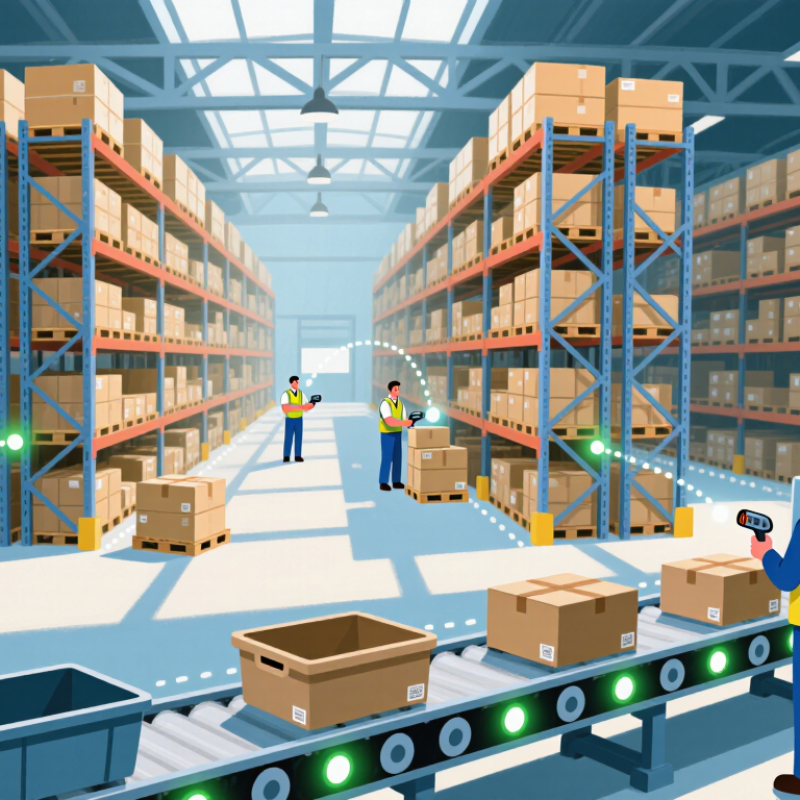
Real-time inventory movement is the continuous recording of stock as it changes location, status, or quantity. A scan when a carton leaves a shelf, a receipt at the loading dock, or a transfer between bins updates the inventory record while the event is happening. “Real-time” does not always mean instantaneous: wireless delays, missed scans, and system processing can leave a short gap. The practical goal is to make each stock movement visible quickly enough for staff to act.
This differs from a periodic count, which may reveal a problem hours or days later. With timely movement data, a warehouse team can see that a pallet has reached a staging area but not its assigned bay. A planner can also spot low available stock before promising it to another order. MHI’s 2024 Annual Industry Report found that 55% of surveyed supply chain professionals planned to increase investment in supply chain technology and innovation. That signals growing interest, but software alone does not create reliable visibility. Staff need clear scanning procedures, accurate item records, and sensible exception checks. Small mistakes matter. A scan into the wrong bin can make stock appear available when it is not, so teams should compare system records with physical checks and review recurring discrepancies.
Why Is Real Time Inventory Movement Important?
How Real-Time Inventory Tracking Works
Real-time inventory tracking records each stock movement as it happens. A worker scans a barcode when receiving a carton, moving a bin, or picking an order. The scan sends an update to inventory software, which changes the item’s quantity and location. Some facilities use sensors or connected equipment, but accurate scans still matter.
Small details count. If a carton moves from a receiving dock to aisle four, the system should reflect that location promptly. Staff can then check available stock before promising an item to a customer or transferring it elsewhere. When quantities fall below a set level, alerts can prompt a review or replenishment order. These updates help teams act on current information rather than yesterday’s spreadsheet.
The process is not flawless. A missed scan can leave a product listed in the wrong bin, even when the software looks current. Regular cycle counts help identify these gaps and correct them. Clear procedures also matter: workers need to know when to scan, especially during returns, damaged-stock checks, and order handoffs. A short delay may seem harmless, but repeated delays can distort demand reports and create avoidable picking errors. The system is useful, but people still have to question what it shows.
| Event Time | Item | Movement | From / To | Quantity | On Hand Before | On Hand After | Recorded By | Operational Effect |
|---|---|---|---|---|---|---|---|---|
| 09:02 | Storage bin, medium | Receipt | Receiving dock → Aisle 04, Bin 12 | +120 | 36 | 156 | Barcode scan | Available stock increases after goods are checked in. |
| 09:18 | Storage bin, medium | Pick for order | Aisle 04, Bin 12 → Packing | −8 | 156 | 148 | Mobile scanner | Order allocation reflects the picked units without waiting for a later count. |
| 09:31 | Shipping carton, small | Transfer | Overflow storage → Aisle 02, Bin 07 | −24 / +24 | 80 / 14 | 56 / 38 | Location scan | Both locations update, helping staff find the stock and avoid duplicate replenishment. |
| 10:05 | Protective mailer | Production issue | Aisle 02, Bin 07 → Packing station | −15 | 64 | 49 | Workstation scan | Materials consumed during packing are deducted from the recorded balance. |
| 10:42 | Storage bin, medium | Return to stock | Returns desk → Aisle 04, Bin 12 | +2 | 148 | 150 | Return scan | Inspected, resalable units become available for future orders. |
| 11:10 | Shipping carton, small | Cycle-count adjustment | Aisle 02, Bin 07 | −1 | 38 | 37 | Count verification | A verified discrepancy is corrected, improving inventory record accuracy. |
| 11:26 | Protective mailer | Replenishment move | Reserve rack → Aisle 02, Bin 07 | −40 / +40 | 200 / 49 | 160 / 89 | Scanner and location confirmation | Pick-face stock is replenished while the reserve balance is updated. |
Tracking flow: A receipt, pick, transfer, return, or adjustment is captured by a scan or connected transaction; the system records the item, quantity, location, and time, then updates the relevant balance. Timely updates help teams make fulfillment and replenishment decisions using current stock records.
Real-time inventory movement matters because several business processes depend on knowing what is available, where it is, and whether it is already committed. Order promising uses that information to avoid selling stock that has moved to another location or been reserved minutes earlier. A visible transfer between a backroom and sales floor can prevent a needless cancellation. Small delays matter.
Replenishment teams use live sales and movement data to trigger orders before shelves empty. Warehouse staff rely on it to pick the right items and direct incoming stock to suitable storage. Production planners need accurate component counts to schedule work; one missing part can leave a production line waiting. The 2023 Inventory Distortion report from IHL Group estimated that global inventory distortion, including overstocks and out-of-stocks, cost retailers about $1.77 trillion. That figure shows the scale of the problem, though it does not mean every loss can be fixed with faster tracking alone.
Inventory visibility also supports customer service, returns handling, and financial controls. Staff can check whether a returned item is sellable, damaged, or still awaiting inspection, rather than quietly adding it back to available stock. Finance teams need dependable movement records to reconcile inventory values and investigate mismatches. The awkward truth: a live dashboard is only as good as the scans and updates behind it. One missed movement can still mislead several teams.
Inventory visibility supports decisions across key business processes. The scores below are illustrative, qualitative ratings—not measured industry statistics.
How to read this chart: A higher score indicates that a process is more dependent on timely, accurate inventory information. Real-time movement updates can help teams coordinate replenishment, fulfill orders, plan production, and reconcile stock.
Real-time inventory monitoring gives teams a current view of every stock movement. When a worker scans a carton, the available quantity changes immediately. This reduces the gap between physical stock and digital records. In a busy warehouse, that gap can cause delayed orders, unnecessary purchases, and frustrated customers.
The benefits become clearer during daily operations. Staff can identify fast-moving products before shelves become empty. Purchasing teams can respond to actual demand instead of relying on outdated spreadsheets. Managers can also trace unusual movements, such as ten units leaving a storage area within five minutes.
These details support better forecasting, more accurate order promises, and faster decisions when demand changes suddenly. It saves time.
Real-time data also improves accountability. Each scan can show who moved an item, when it moved, and where it went. That record supports practical investigations and more reliable stock counts. However, the system depends on disciplined processes. A missed scan, damaged label, or weak network connection can still create incorrect information. Real-time does not mean perfect. Teams should compare system data with regular physical checks and review recurring discrepancies. A small daily mismatch may reveal a training issue, a poor storage layout, or a process that needs redesigning. Accurate monitoring requires both dependable technology and careful human judgment.
Companies can implement real-time inventory movement by mapping every physical handoff. Record receiving, put-away, picking, packing, transfers, and returns. Each scan should capture the item, quantity, location, timestamp, and operator. Use barcode or RFID scanning where practical. Connect scanners to a centralized inventory platform with clear access controls. If the signal drops, store events locally and synchronize them later. This prevents silent data gaps. Keep it visible.
Implementation should begin with one warehouse zone, not the entire network. Define standard movement codes and train staff with actual cartons. Supervisors can compare scan records against shelf counts each shift. Small discrepancies reveal damaged labels, rushed picks, or misplaced stock. Set alerts for negative balances, unusual transfer times, and repeated adjustments. Alerts need human review. Automation alone can repeat bad data quickly. In practice, clean location labels often improve accuracy more than expensive hardware.
Reliable results require governance. Assign owners for master data, device maintenance, and exception handling. Audit permissions and retain movement histories for operational review. Managers should measure inventory accuracy, scan compliance, order delays, and adjustment rates weekly. Do not hide weak results. A pilot may expose poor Wi-Fi or confusing workflows. Fix those conditions before expanding. Teams should test manual logging during outages and reconcile those records promptly. It is not perfect.
It records each stock movement as it happens. A worker scans a carton, bin, or picked order. The system updates quantity and location immediately. It is useful, not flawless.
Accurate updates show what is available now. Teams can avoid promising stock that already moved. This reduces delayed orders and unnecessary purchases. Small delays can create larger problems.
Track receiving, put-away, picking, packing, transfers, and returns. Damaged stock also needs a clear movement record. Each event should include quantity, location, time, and operator. Do not skip handoffs.
The product may remain listed in the wrong bin. A shelf can look full digitally but empty physically. Regular cycle counts help uncover these gaps. The screen may be wrong.
Start with one warehouse zone. Map every physical handoff in that area. Use real cartons during staff training. Expand only after recurring errors are understood.
Barcode scanners and RFID tools can record stock movements. Connected equipment may send automatic updates. Clear location labels often matter more than costly hardware. Simple systems can work well.
Scanners should store movement events locally when signals fail. They can synchronize records after connection returns. Staff should also use a temporary manual log. Reconcile it quickly.
Compare scan records with physical shelf counts. Review inventory accuracy, scan compliance, delays, and adjustments weekly. Investigate negative balances and repeated corrections. Real-time does not mean perfect.
Real-time inventory movement gives businesses an up-to-date view of where products are, how many are available, and when stock is received, moved, or shipped. It typically works by capturing inventory changes through scans, connected devices, or digital transaction records and updating a shared system. This visibility supports purchasing, production, order fulfillment, and customer service by helping teams make decisions based on current information rather than outdated counts.
So, why is real time inventory movement important? It can reduce stockouts and excess inventory, improve order accuracy, speed up responses to changing demand, and make it easier to identify delays or discrepancies. Companies can put it into practice by mapping how inventory moves, choosing suitable tracking tools, connecting relevant systems, setting clear procedures, and training staff to record each movement promptly. Regular reviews help ensure the data remains reliable and useful.
JK Logistics