Explore our premium grade materials handling and intelligence control components deployed in Baltic e-commerce hubs and cargo ports.
Latvia, situated at the heart of the Baltic states, represents a critical geographical corridor bridging the European Union, Scandinavia, and major eastern trade channels. With deep-water ports in Riga, Liepāja, and Ventspils, along with the development of the transformative Rail Baltica railway project, the demand for sophisticated logistical hubs within Latvia has scaled exponentially. Logistics operators are shifting from manual material handling to automated, data-driven systems to accommodate increased transshipment volumes and higher throughput requirements.
To sustain this development, the adoption of modern factory automation systems and smart logistics infrastructure has become imperative. Modern Latvian warehouses require flexible, intelligent frameworks that can process high volumes of parcels, manage cargo distribution, and minimize turnaround times. Implementing sortation systems, robotic palletizers, and dynamic scanning equipment provides the exact operational framework necessary to transform conventional warehouses into high-performance distribution hubs.
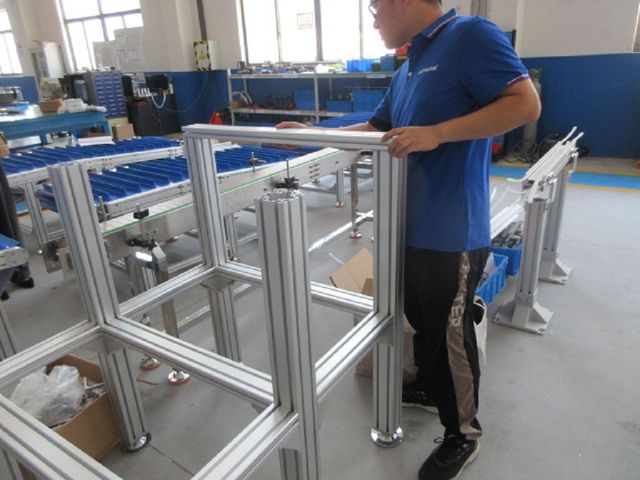
The global warehousing landscape is experiencing a paradigm shift driven by e-commerce acceleration, labor shortages, and the integration of Industry 4.0 standards. Modern facilities are no longer just storage spaces; they are highly dynamic environments powered by cyber-physical systems. Mainstream industry drivers include:
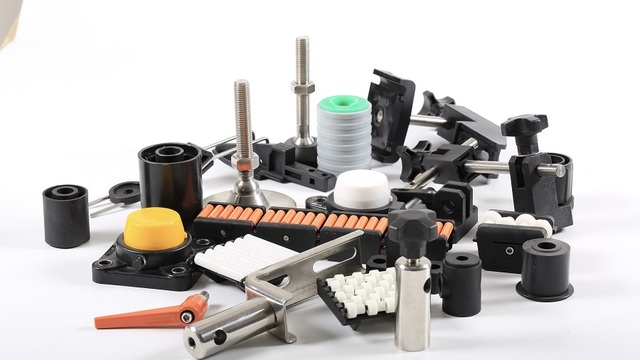
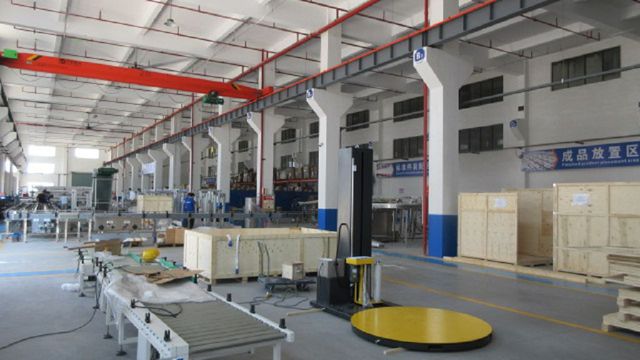
As a leading warehouse conveyor systems manufacturer based in Shenzhen, China, Shenzhen JK Logistics Co., Ltd. leverages the unique manufacturing ecosystem of the Pearl River Delta to deliver highly resilient supply chains. The concept of Factory 4.0 is fully integrated into our production floors—combining automated CNC steel fabrication, robotic welding cells, and sophisticated quality control testing matrices.
For European and Baltic buyers, sourcing smart logistics components from China offers significant advantages:
Engineering Tailorability: We don't just manufacture; we develop customized solutions aligned with specific warehouse layouts and throughput requirements.
Scalability and Delivery Speed: Our high-capacity production lines ensure that large-scale infrastructure projects in Latvia, Sweden, or Germany are completed within tight timelines, reducing global transit disruption impacts.
Rigorous Material Quality: Utilizing high-grade Q235 structural steel, premium conveyor belt composites, and world-class mechanical drives ensures long-term operational durability.
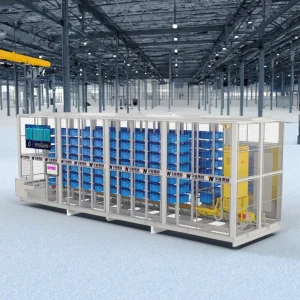
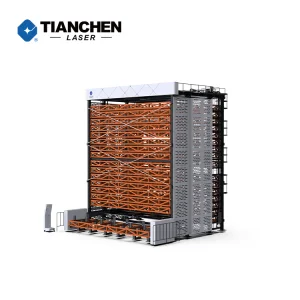
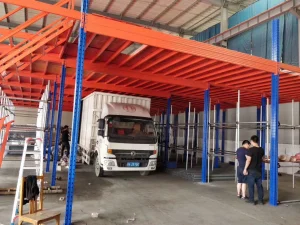
Explore heavy-duty storage towers, space-saving mezzanine structures, and automated WMS conveyor integrations engineered for Baltic logistics environments.
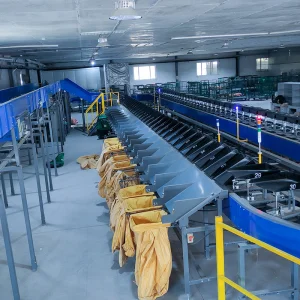
Different industrial facilities have highly diverse material handling requirements. Here is how our automated solutions integrate directly into Latvia's key growth sectors:
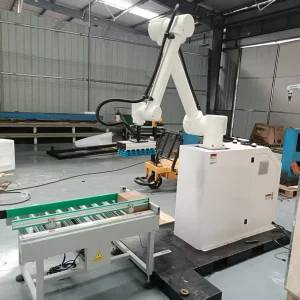
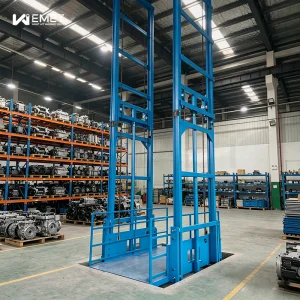
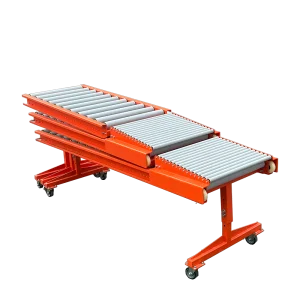
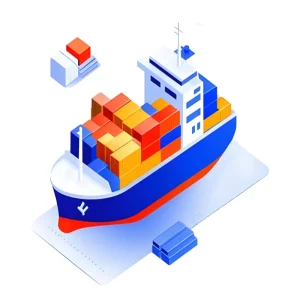
At Ventspils and Riga, rapid container loading and unloading are paramount. The deployment of heavy-duty cargo lifts, telescopic container offloading rollers, and high-capacity palletizers enables direct flow from maritime cargo to inland distribution fleets, minimizing port congestion charges.
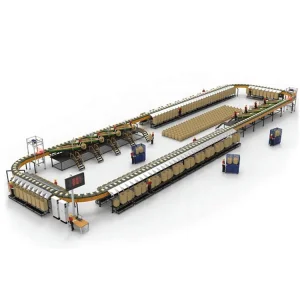
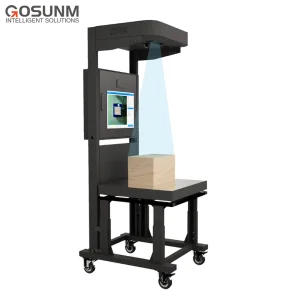
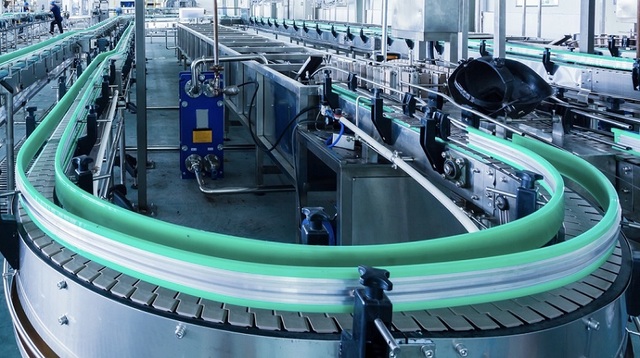
Baltic retail platforms servicing Latvia, Estonia, and Lithuania require sub-millimeter precision in parcel routing. Utilizing integrated DWS (Dimension Weight Scanning) systems along with automated belt conveyor networks allows hubs in Riga to sort up to 8,000 cross-border parcels hourly.
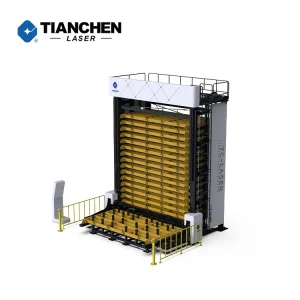
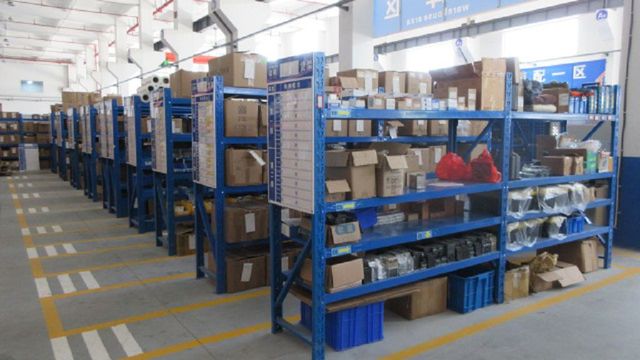
Latvia's booming timber manufacturing industry requires heavy-duty storage configurations. Custom engineered structural steel mezzanine racking and sheet metal storage towers allow wood processing plants to organize raw materials safely, maximizing vertical floor space usage.
A major bottleneck for logistics operators in the Baltic region is integrating physical machinery with existing software stacks. Shenzhen JK Logistics addresses this by providing open API connectivity protocols. Our automated conveyors and sorting devices interface seamlessly with leading Enterprise Resource Planning (ERP) platforms and Warehouse Management Systems (WMS). This ensures that parcel scanning data, shipping manifests, and weight certifications are instantly uploaded to cloud storage platforms, enabling real-time supply chain transparency.
Select from our complete range of certified conveyors, sorting setups, material handling devices, and intermodal tracking solutions.
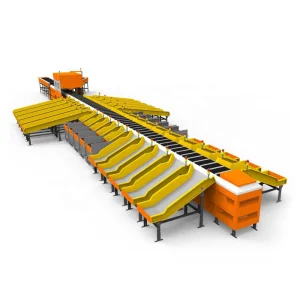

Shenzhen JK Logistics Co., Ltd. is a professional Warehouse Conveyor Systems Manufacturer specializing in material handling, sorting systems, and logistics automation solutions for modern warehouses, distribution centers, and industrial facilities. Based in Shenzhen, China, the company focuses on the development and production of intelligent automation equipment designed to improve operational efficiency, optimize material flow, and support the growing demands of global supply chains.
With extensive experience in warehouse and logistics automation, JK Logistics provides integrated solutions covering material handling systems, warehouse conveying equipment, automated sorting technologies, order fulfillment automation, pallet handling solutions, distribution center infrastructure, and smart logistics integration. These solutions are widely used in e-commerce fulfillment centers, retail distribution networks, third-party logistics operations, manufacturing facilities, and parcel processing hubs.
The company is committed to delivering reliable, scalable, and customized automation solutions that address the challenges of modern warehousing. Its engineering team collaborates closely with customers to analyze operational requirements, warehouse layouts, throughput objectives, and future expansion plans. By combining automation technology with practical logistics expertise, JK Logistics develops systems that improve productivity, reduce manual handling, enhance accuracy, and streamline warehouse operations.
Equipped with advanced manufacturing capabilities and comprehensive quality management processes, the company maintains strict standards throughout design, production, testing, and installation. Continuous investment in research and development enables JK Logistics to incorporate intelligent control technologies, data-driven automation, and flexible system integration into its solutions.
Serving customers across Asia, Europe, North America, South America, the Middle East, and other international markets, Shenzhen JK Logistics Co., Ltd. is dedicated to providing efficient warehouse conveyor systems and logistics automation solutions that help businesses improve operational performance, increase supply chain efficiency, and adapt to the evolving requirements of modern distribution and fulfillment environments.

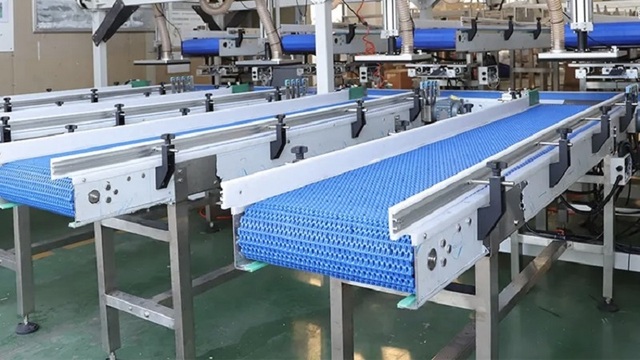
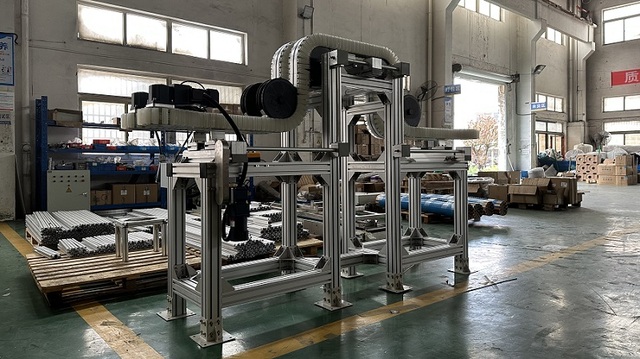
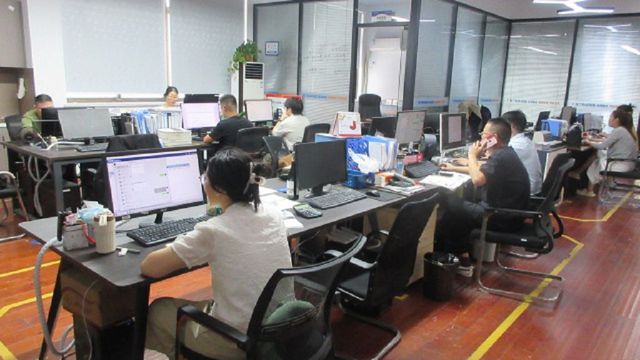

Procuring automated logistics equipment from international manufacturers requires a deep understanding of structural certifications, electrical safety protocols, and commissioning requirements. When Latvian and European operators purchase conveyor hardware from Shenzhen JK Logistics, they benefit from standardizations designed to align directly with EU guidelines:
Every motorized palletizing robot arm, dynamic sorting belt, and cargo elevator exported to the EU undergoes rigorous electrical and mechanical testing. The structural steel configurations are calculated according to EN 1993 (Eurocode 3) specifications, ensuring they can handle specified design loads safely. Motorized components integrate standard gearboxes and drives matching European grid voltages (380V/400V AC, 50Hz) and bear the CE marking certifying adherence to health, safety, and environmental protection standards.
To mitigate down-time risks, JK Logistics implements IoT diagnostics inside our automation PLC controllers. In a typical Riga distribution center, maintenance engineers can access the control panel telemetry remotely. Our technical support office in Shenzhen can debug system logic and troubleshoot PLC code changes online. Additionally, we provide localized wear-and-tear parts kits, ensuring common spares (roller bearings, belt sections, photo-electric sensors) are always available onsite.
Technical guidance and commercial parameters regarding smart logistics installations in Latvia and the wider Baltic region.
Partner with Shenzhen JK Logistics to bring advanced automated sorting, high-speed conveying, and heavy-payload robotic material handling to your Baltic distribution hubs.
Send Inquiry Now → JK Logistics