Explore our core engineering catalog optimized for high-throughput returns, cross-docking, and industrial warehouse execution.
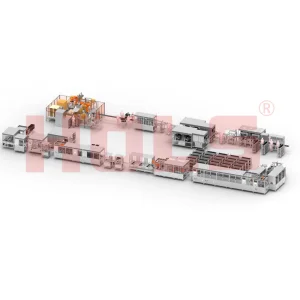
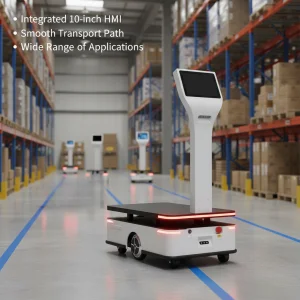
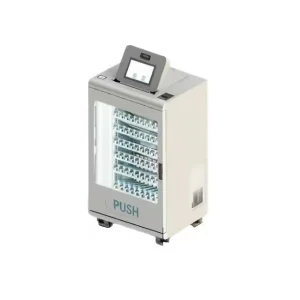
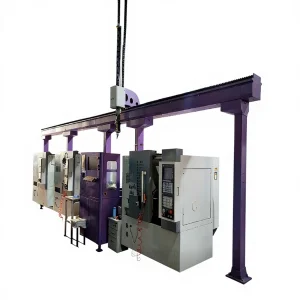
In the contemporary global trade ecosystem, logistics is no longer characterized by a simple one-way flow from raw materials to consumer products. The rise of multi-channel distribution networks, the explosive expansion of global e-commerce, and strict green manufacturing legislation have transformed Reverse Logistics Systems into a core operational pillar. The global market now demands structured, scalable, and intelligent hardware-software frameworks capable of processing returns, recycling assets, refurbishing consumer electronics, and reclaiming value from industrial parts.
Modern enterprises face return rates averaging 15% to 30% across various consumer sectors, with industrial components requiring systematic asset recovery routes. Standard linear fulfillment systems are unequipped to handle the high unpredictability, small batch sizes, and diverse item conditions inherent in returns. Consequently, implementing a robust OEM/ODM reverse logistics hardware framework is critical. It allows factories, distribution centers, and OEMs to minimize processing cycle times, maximize asset recovery value, and meet demanding ESG (Environmental, Social, and Governance) targets.
Procurement departments, supply chain directors, and systems integrators looking for an OEM/ODM Reverse Logistics Systems supplier prioritize critical performance features over basic price-point comparison. When analyzing technical RFPs from major distributors, four core demands stand out:
Return volumes are highly cyclical. Procurement teams seek modular conveyor systems, sorting diverters, and AS/RS frameworks that can scale dynamically during peak return seasons without requiring major civil engineering renovations.
Unlike outbound sorting where every package is uniform, returned items arrive in varying packaging states, conditions, and orientations. Procurement mandates advanced vision systems, high-speed barcode sensors, and multi-angle camera arrays.
Hardware must easily integrate with existing software layers. High-level logistics operations require RESTful APIs, OPC UA protocols, and industrial fieldbus compatibility to connect warehouse machines to ERPs, WCS, and WMS.
In addition, global regulatory frameworks like the European Union's Extended Producer Responsibility (EPR) require companies to maintain digital chain-of-custody data for electronic and heavy industrial waste. Consequently, reverse logistics infrastructure must serve as a physical data gathering platform, logging serial numbers, weights, and component diagnostics at the moment of entry.
An enterprise-grade reverse logistics system must be tailored to the specific flow patterns of different industries. Different sectors require distinct mechanical configurations, weight capacities, and automation controls:
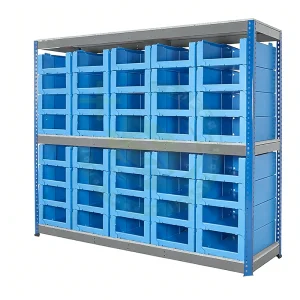
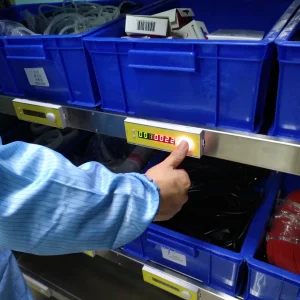
E-commerce return centers run on speed. The primary mechanical focus here is on parcel sorting machines, put-to-light systems, and smart picking bins that enable rapid induction and classification of returned fashion items, electronics, and general merchandise. By integrating *Put To Light (PTL) wireless digital parcel sorters* with smart picking shelves, warehouses can achieve sorting throughputs exceeding 4,000 parcels per hour with nearly zero sorting errors.
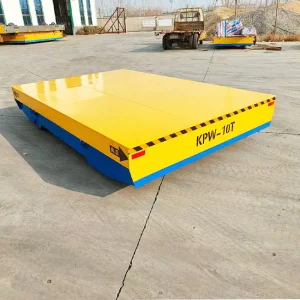
In heavy industries like automotive manufacturing, aerospace, and energy, returns focus on heavy cores (e.g., engines, alternators, hydraulic pumps). These processes require high-load capabilities, utilizing trackless battery-powered transfer carts (up to 10 tons capacity) and robust automatic gantry robots for CNC interface handling. The system must move large metal assemblies from decontamination zones to precision dimensional scanning stations safely and efficiently.
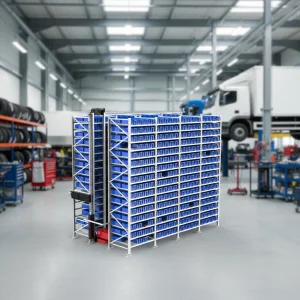
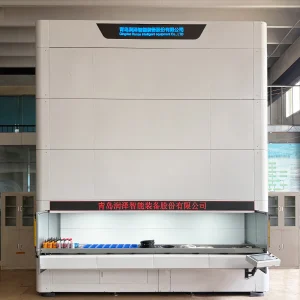
Consumer electronics require sensitive handling to protect aesthetic surfaces and electrostatic-sensitive components. Specialized automated storage systems, such as *Vertical Lift Modules (VLMs)* and *AS/RS Miniload* units, store high-value returns in secure, dust-controlled environments. These systems run inventory checks and verify serial numbers before routing items to clean-room testing benches.
The transition from manual returns handling to fully automated, AI-driven circular logistics platforms requires a clear technical roadmap. For OEMs and ODMs developing the next generation of warehouse machines, the integration of physical hardware and intelligent control algorithms involves key stages:
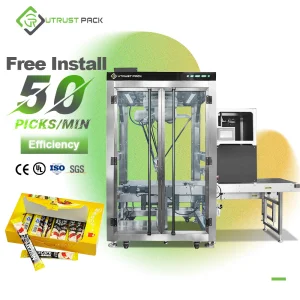
Looking to the future, reverse logistics will utilize more adaptive robotics. Standard picking arms struggle with deformities, open boxes, and flexible plastic shipping bags. AI-driven path planning, combined with vacuum and mechanical grippers on high-speed delta robots, will allow systems to adjust their grasp in real time based on the material characteristics of each returned item.
Deploying automated material handling networks across multiple international locations requires compliance with local regulations. Operational requirements, safety standards, and logistical compliance rules vary significantly by region:
To support global supply chains, suppliers must maintain international engineering networks. This includes providing remote diagnostic support, stocking critical spare parts in key regions, and offering on-site technical services during system integration. This minimizes downtime and ensures that heavy-duty sorting lines, AS/RS structures, and AGVs operate continuously.
E-E-A-T Trust Indicator: When deploying cross-border warehouse automation, ensure your equipment manufacturer provides complete factory acceptance testing (FAT) logs, localized CE/UL electrical certifications, and comprehensive bilingual technical documentation.
Shenzhen JK Logistics Co., Ltd. is a professional Warehouse Conveyor Systems Manufacturer specializing in material handling, sorting systems, and logistics automation solutions for modern warehouses, distribution centers, and industrial facilities. Based in Shenzhen, China, the company focuses on the development and production of intelligent automation equipment designed to improve operational efficiency, optimize material flow, and support the growing demands of global supply chains.
With extensive experience in warehouse and logistics automation, JK Logistics provides integrated solutions covering material handling systems, warehouse conveying equipment, automated sorting technologies, order fulfillment automation, pallet handling solutions, distribution center infrastructure, and smart logistics integration. These solutions are widely used in e-commerce fulfillment centers, retail distribution networks, third-party logistics operations, manufacturing facilities, and parcel processing hubs.
The company is committed to delivering reliable, scalable, and customized automation solutions that address the challenges of modern warehousing. Its engineering team collaborates closely with customers to analyze operational requirements, warehouse layouts, throughput objectives, and future expansion plans. By combining automation technology with practical logistics expertise, JK Logistics develops systems that improve productivity, reduce manual handling, enhance accuracy, and streamline warehouse operations.
Equipped with advanced manufacturing capabilities and comprehensive quality management processes, the company maintains strict standards throughout design, production, testing, and installation. Continuous investment in research and development enables JK Logistics to incorporate intelligent control technologies, data-driven automation, and flexible system integration into its solutions.
Serving customers across Asia, Europe, North America, South America, the Middle East, and other international markets, Shenzhen JK Logistics Co., Ltd. is dedicated to providing efficient warehouse conveyor systems and logistics automation solutions that help businesses improve operational performance, increase supply chain efficiency, and adapt to the evolving requirements of modern distribution and fulfillment environments.

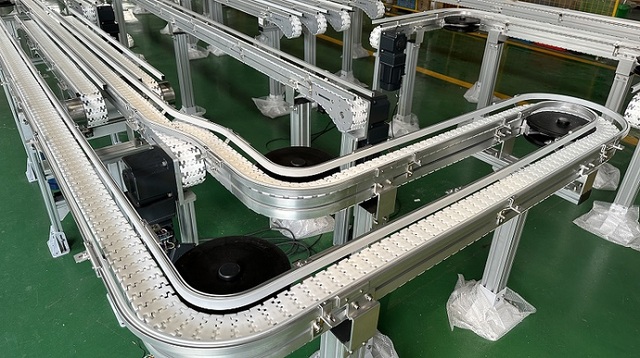
Integrate our high-performance sorting, picking, and material handling systems into your facility design.
 JK Logistics