Engineered for Japanese manufacturing facilities, logistics networks, and e-commerce fulfillment hubs requiring extreme operational efficiency and structural durability.
Nagoya, the capital of Japan's Aichi Prefecture, stands as the undisputed heart of the country’s industrial sector. Accounting for a massive portion of Japan's manufacturing output, the Greater Nagoya area is internationally recognized as a leading automotive, aerospace, and advanced machinery hub. Central to this dense manufacturing matrix is the principle of Just-In-Time (JIT) logistics, pioneered by global icons such as Toyota. To maintain the tight schedules required by these highly synchronized production lines, warehouse automation and advanced carton transport solutions are no longer optional—they are foundational infrastructure.
In contemporary Nagoya logistics, materials must flow uninterrupted from packaging lines directly to regional distribution networks and the Port of Nagoya—one of Japan’s largest shipping hubs. High-volume manufacturing plants require automated conveyor networks that handle various carton configurations with minimal down-time. Structural integrity, rapid throughput, precise sorting mechanisms, and strict compliance with local safety standards (including seismic requirements specific to Japan) represent the standard operating parameters for system integrators inside the Tokai region.
With skyrocketing e-commerce demands and a shrinking labor demographic, Nagoya-based warehouses are shifting from manual sorting to complex, multi-tiered automated conveyor lines. Solutions must provide rapid throughput speeds while maintaining a minimal floor footprint.
Understanding the critical specifications and strategic needs of international supply chain directors, procurement managers, and plant operations executives.
Global procurement teams prioritize machinery that minimizes operational expenditures over a 10-year life cycle. Energy-efficient motors, low-wear modular belts, and modular components reduce maintenance windows and lower spare parts inventory costs significantly.
Modern fulfillment operations require flexible speed profiles. Dynamic variable frequency drives (VFD) allow system operators to scale transport speed from 0.5 m/s during low-demand periods up to 2.5 m/s during peak seasonal rushes without losing positional tracking.
Seamless vertical integration with existing Warehouse Management Systems (WMS) via industrial protocols like EtherNet/IP, PROFINET, or Modbus is mandatory. Enterprise buyers require real-time tracking of individual cartons to support upstream sorting decisions.
Exploring the engineering architectural setups necessary to move cartons fluidly from production floors to cargo bays.
At the macro-industry level, carton transport systems must bridge the gap between production zones, storage systems, and outbound logistics terminals. This transition is governed by three primary sub-systems, engineered to function in complete harmony:
Zero-Pressure Accumulation (ZPA) conveyors prevent cartons from colliding, protecting fragile goods and outer packaging. Utilizing localized photo-eye sensors, each conveyor zone runs only when the downstream zone is clear, minimizing wear-and-tear and slashing power draw by up to 50% compared to continuously running systems.
To direct cartons onto different shipping lines, high-speed sorting technologies like dynamic pop-up wheel diverters or sliding shoe sorters are deployed. These systems handle varying carton weights, sizes, and structural rigidities without slowing down, maintaining throughput speeds of over 100 units per minute.
Modern distribution facilities optimize vertical space by utilizing multi-level storage. Spiral conveyors and vertical reciprocating lifts safely transition cartons between mezzanine levels and ground floors, providing a continuous flow with a tiny physical footprint.
By implementing these macro-level systems, regional logistics centers in areas like Nagoya’s port district can transition from isolated packing zones to unified, self-healing material handling networks capable of adapting to varying carton loads and physical routing disruptions.
As industry 4.0 matures, the future of carton transport relies heavily on automation intelligence, edge computing, and green practices. Our technical roadmap focuses on integrating advanced sensing technologies with high-performance physical logistics hardware.
Predictive Diagnostics: Future conveyance solutions will utilize vibration and temperature sensors mounted on motor-gearboxes. These sensors send performance telemetry to a cloud platform, analyzing metrics to predict failure points weeks before they occur. This virtually eliminates unscheduled downtime in critical shipping windows.
Decarbonization & Regenerative Braking: Aligning with global carbon-reduction mandates, new motor control platforms utilize regenerative energy. Braking energy from descending cartons or deceleration periods is captured and fed back into the facility’s electrical grid, helping warehouses meet strict ESG goals.
Dynamic Volumetric In-motion Scanning: Incorporating overhead laser scanners and weight sensors directly into the conveyor line allows for automatic volume and weight checks at full conveyor speeds. The system automatically flags irregular cartons and alerts operators before jam conditions occur.
Serving critical industrial hubs across continents with specialized cargo handling solutions and highly structured conveyor frameworks.
Interconnecting Chinese manufacturing centers with Japanese distribution hubs like Nagoya and Tokyo, allowing seamless transport of automotive parts, consumer goods, and electrical appliances.
Supplying massive retail distribution centers with robust conveyor layouts that handle heavy shipping loads, adhering strictly to OSHA safety regulations and local electrical codes.
Delivering high-speed cross-belt sorting systems optimized for rapid parcel distribution, fully compliant with CE safety directives and digital logistics integrations.
Ensuring that our high-capacity carton transport configurations satisfy local Japanese engineering rules and facility safety codes.
Installing conveyor and sorting hardware in Nagoya requires a deep understanding of Japanese industrial regulations. The Tokai region has specific structural mandates due to high seismic activity, making industrial safety a key engineering factor.
JIS Compliance: All mechanical components, structural steel supports, and roller bearing assemblies align with Japan Industrial Standards (JIS B 8802 for roller conveyors and JIS B 8803 for belt conveyors). This ensures compatibility with local installations and guarantees component longevity under heavy operating schedules.
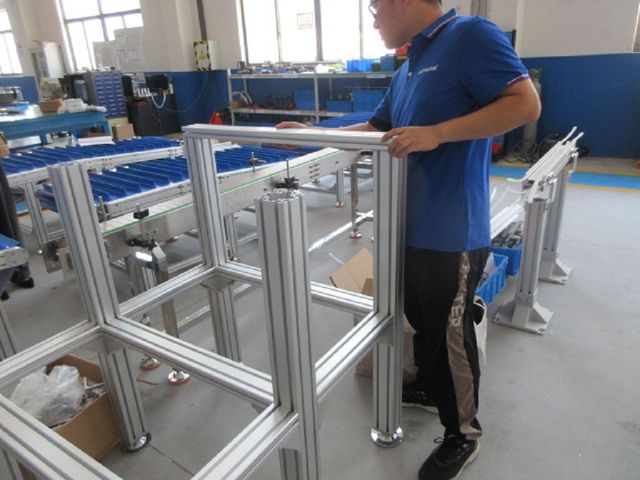
Seismic Structural Calculations: Our engineering department designs supporting frames with integrated lateral sway bracing and heavy-duty anchor brackets. We perform complete finite element analysis (FEA) to confirm that the installed conveyor layouts can withstand regional earth movement events, minimizing structural risks for facility staff.
Local Technical Partnerships: To facilitate rapid commissioning and regional aftermarket support, we collaborate with experienced mechanical and electrical contractors in Nagoya. This localized partner network guarantees that preventative maintenance, on-site diagnostics, and critical spare parts deliveries are handled quickly, eliminating long-distance shipping delays.
Electrical Control Adaptation: Our electrical control cabinets are adapted for Japanese utility specifications. Power systems are pre-configured to run reliably on 200V/220V three-phase systems at 60Hz (typical for Western and Central Japan, including Aichi Prefecture), using JEM-compliant switchgear and control devices.
A professional Warehouse Conveyor Systems Manufacturer specializing in advanced material handling, automated sorting, and modern logistics solutions.
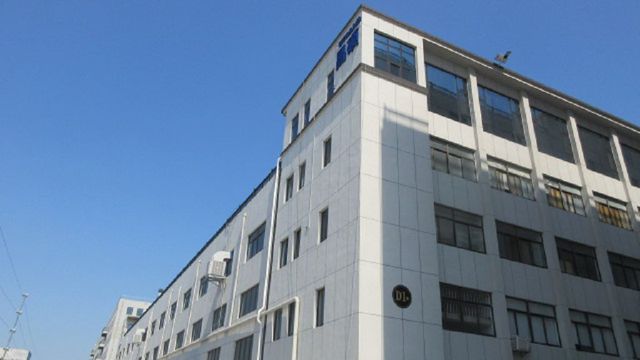
Shenzhen JK Logistics Co., Ltd. is a professional Warehouse Conveyor Systems Manufacturer specializing in material handling, sorting systems, and logistics automation solutions for modern warehouses, distribution centers, and industrial facilities. Based in Shenzhen, China, the company focuses on the development and production of intelligent automation equipment designed to improve operational efficiency, optimize material flow, and support the growing demands of global supply chains.
With extensive experience in warehouse and logistics automation, JK Logistics provides integrated solutions covering material handling systems, warehouse conveying equipment, automated sorting technologies, order fulfillment automation, pallet handling solutions, distribution center infrastructure, and smart logistics integration. These solutions are widely used in e-commerce fulfillment centers, retail distribution networks, third-party logistics operations, manufacturing facilities, and parcel processing hubs.
The company is committed to delivering reliable, scalable, and customized automation solutions that address the challenges of modern warehousing. Its engineering team collaborates closely with customers to analyze operational requirements, warehouse layouts, throughput objectives, and future expansion plans. By combining automation technology with practical logistics expertise, JK Logistics develops systems that improve productivity, reduce manual handling, enhance accuracy, and streamline warehouse operations.
Equipped with advanced manufacturing capabilities and comprehensive quality management processes, the company maintains strict standards throughout design, production, testing, and installation. Continuous investment in research and development enables JK Logistics to incorporate intelligent control technologies, data-driven automation, and flexible system integration into its solutions.
Serving customers across Asia, Europe, North America, South America, the Middle East, and other international markets, Shenzhen JK Logistics Co., Ltd. is dedicated to providing efficient warehouse conveyor systems and logistics automation solutions that help businesses improve operational performance, increase supply chain efficiency, and adapt to the evolving requirements of modern distribution and fulfillment environments.
Detailed technical answers addressing standard setup, capacity, safety, and integration concerns from procurement officers.
Our engineers design structural frameworks based on regional seismic coefficients (K-values) for the Tokai region. We use reinforced structural steel, specific floor anchoring systems, and lateral diagonal bracing to maintain structural integrity. This prevents misalignment of high-precision sorting belts during seismic events.
Our systems integrate with major industrial control systems, supporting Mitsubishi (MELSEC series), Siemens (S7-1200/1500), and Rockwell Automation (Allen-Bradley ControlLogix). We configure standard communication protocols like PROFINET, EtherCAT, and CC-Link to integrate with local facility networks.
Typical delivery ranges from 8 to 12 weeks, depending on the complexity of the sorting layout. This timeline covers structural design engineering, mechanical fabrication, electrical wiring assembly, factory testing (FAT), packaging, and shipping to the Port of Nagoya.
ZPA divided the conveyor line into physical zones. Each zone is managed by an individual roller controller and photosensor, moving the carton forward only when the downstream zone is unoccupied. This prevents physical contact and collision between cartons, protecting packages during transport.
Yes, our conveyor structures and drive elements conform to global environment directives, including RoHS and CE requirements, and align with Japan's energy efficiency targets. Low-friction belts and energy-efficient motor rollers contribute to lower carbon footprint ratings for industrial facilities.
Explore our wider range of logistics, transport, and custom product designs adapted for export markets.
Consult with our lead logistics engineering specialists. We prepare layout drafts, load estimations, and throughput evaluations tailored for your Nagoya facility requirements.
Send Inquiry Now JK Logistics