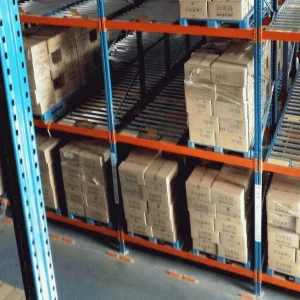
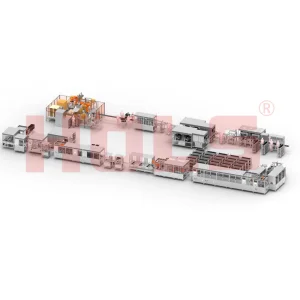
Explore our top-performing automated hardware and routing systems deployed globally for enterprise-level logistics, retail distribution, and assembly lines.
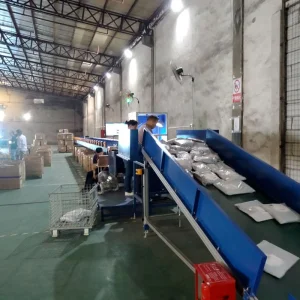
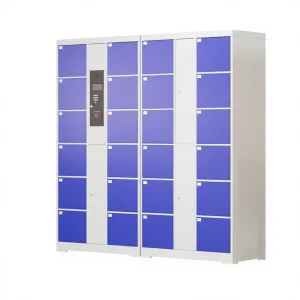
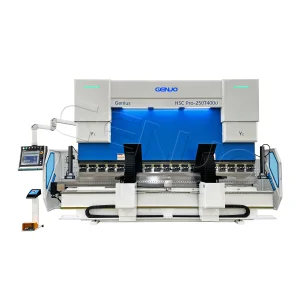
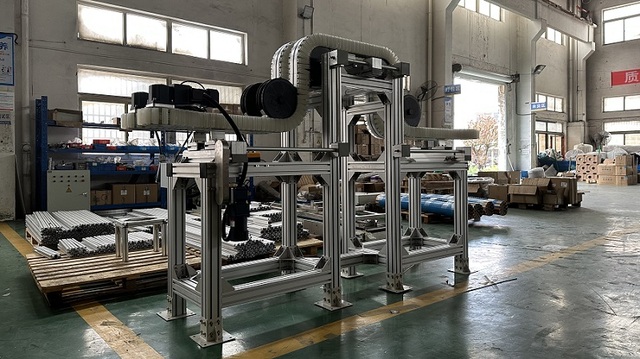
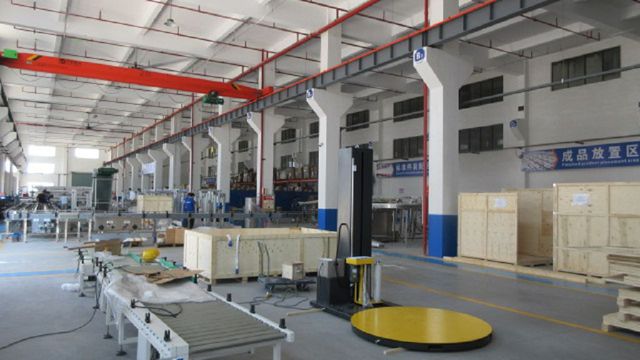
Shenzhen JK Logistics Co., Ltd. is a professional Warehouse Conveyor Systems Manufacturer specializing in material handling, sorting systems, and logistics automation solutions for modern warehouses, distribution centers, and industrial facilities. Based in Shenzhen, China, the company focuses on the development and production of intelligent automation equipment designed to improve operational efficiency, optimize material flow, and support the growing demands of global supply chains.
With extensive experience in warehouse and logistics automation, JK Logistics provides integrated solutions covering material handling systems, warehouse conveying equipment, automated sorting technologies, order fulfillment automation, pallet handling solutions, distribution center infrastructure, and smart logistics integration. These solutions are widely used in e-commerce fulfillment centers, retail distribution networks, third-party logistics operations, manufacturing facilities, and parcel processing hubs.
The company is committed to delivering reliable, scalable, and customized automation solutions that address the challenges of modern warehousing. Its engineering team collaborates closely with customers to analyze operational requirements, warehouse layouts, throughput objectives, and future expansion plans. By combining automation technology with practical logistics expertise, JK Logistics develops systems that improve productivity, reduce manual handling, enhance accuracy, and streamline warehouse operations.
Equipped with advanced manufacturing capabilities and comprehensive quality management processes, the company maintains strict standards throughout design, production, testing, and installation. Continuous investment in research and development enables JK Logistics to incorporate intelligent control technologies, data-driven automation, and flexible system integration into its solutions.
Serving customers across Asia, Europe, North America, South America, the Middle East, and other international markets, Shenzhen JK Logistics Co., Ltd. is dedicated to providing efficient warehouse conveyor systems and logistics automation solutions that help businesses improve operational performance, increase supply chain efficiency, and adapt to the evolving requirements of modern distribution and fulfillment environments.
An in-depth analysis of how dynamic routing algorithms, ASRS integrations, and AMR fleets are redefining modern intralogistics efficiency.
Traditional warehouse architectures relied heavily on fixed, static conveyor lines. While highly effective for uniform throughput, they suffer from single points of failure and lack flexibility. Modern global supply chains demand dynamic routing optimization. By deploying decentralized scheduling algorithms (such as Distributed Agent-Based Modeling and deep reinforcement learning), facilities can reroute flows instantly when a bottle-neck occurs.
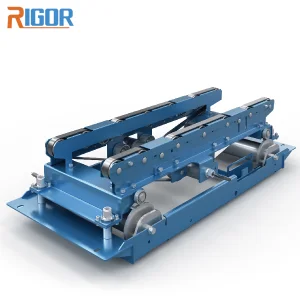
For instance, at a high-volume parcel terminal, if an "Air-Push Intelligent Sorting" node reports a temporary jam, a WES (Warehouse Execution System) with route optimization dynamically recalculates upstream transfer targets, routing parcels via a "Pop-up Transfer Tool" to alternative sorting lanes. This micro-second adjustment keeps the main loop free of backlogs, maintaining peak design throughput.
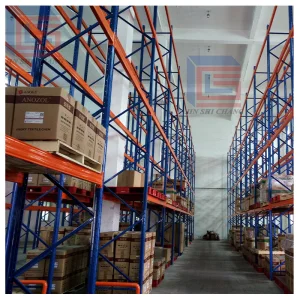
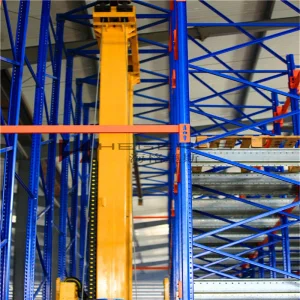
In the wake of labor shortages and sky-rocketing land values across North America, Europe, and Asia, high-density warehousing is no longer optional. Industrial operations are shifting from wide-aisle forklift operations to narrow-aisle, vertically integrated AS/RS (Automated Storage and Retrieval Systems). Stacker Cranes and Pallet Flow Systems must coordinate routes across three dimensions (X, Y, Z coordinates).
A key challenge in global commercial logistics is mixed-load palletizing and dynamic order consolidation. The path a robot stacker crane takes to retrieve eight distinct SKUs from a 30-meter-high rack directly affects order cycle times. Advanced route optimization systems run real-time heuristics to ensure retrieval routes minimize travel time and energy expenditure, feeding the picking stations in the precise sequence required for packing.
The modern automated facility runs on a layered software stack: ERP down to WMS (Warehouse Management System), down to WES/WCS (Warehouse Execution/Control Systems), down to localized PLCs and AMR Fleet Management. Route optimization is the connective tissue. Historically, these systems operated in silos, leading to conflicts—such as a WCS routing a pallet to a location that the WMS was simultaneously planning to clear.
Shenzhen JK Logistics Co., Ltd. solves this through open API architectures and support for industry-standard communication protocols (such as OPC UA, EtherCAT, and VDA 5050). Under a unified route optimization engine, AMRs and static conveyor components share location, speed, and status telemetry. The AMR knows when a conveyor is ready to receive a load, adjusting its route and arrival time down to the second to avoid line-side congestion.
How our route optimization solutions solve regional, regulatory, and industrial-specific challenges across key global markets.
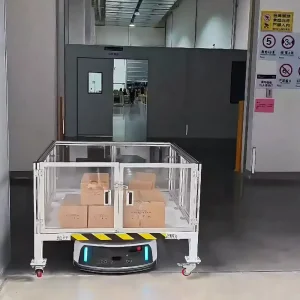
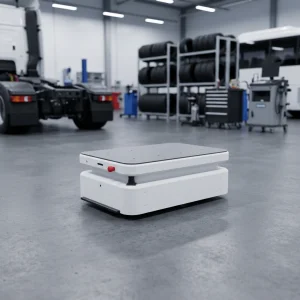
Integrating 1000W Automated Latent Lifting AMRs to perform "Goods-to-Person" routing. The system calculates optimal paths to navigate dynamic pick faces, avoiding bottlenecks during high-volume sales events, and increases picking speed by up to 300% compared to manual picking.
Utilizing automated pallet flow systems combined with ASRS stacker cranes inside sub-zero environments. Optimized routing reduces door-opening frequencies and travel times, minimizing temperature fluctuations and lowering energy consumption in thermal zones.
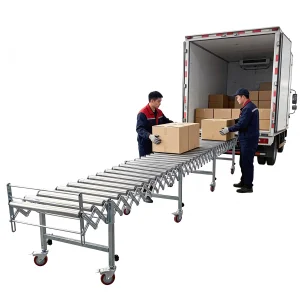
Line-side replenishment using dynamic heavy-duty AMRs and flexible telescopic conveyors. The routing engine adjusts robot paths based on real-time assembly line speed changes, ensuring components arrive just-in-time (JIT) without cluttering the manufacturing floor.
The technological path towards fully autonomous, self-healing intralogistics networks powered by Edge AI and 5G swarming.
Integration of LiDAR, Visual SLAM, and UWB (Ultra-Wideband) sensors to provide millimeter-level positioning. Dynamic routing software leverages this data to perform real-time obstacle avoidance and path replanning within dense warehouse corridors.
Moving central routing calculations to Edge-compute nodes located directly on the warehouse floor. Full deployment of VDA 5050 protocols, allowing users to orchestrate AMRs, forklifts, and sorters from different manufacturers under a single, unified control panel.
Leveraging Large AI Models (LMMs) and predictive analytics to forecast warehouse demand spikes. The system pre-stages inventory and dynamically adjusts routing networks before bottlenecks occur, enabling fully self-healing logistics workflows.
Why partnering with Shenzhen JK Logistics Co., Ltd. delivers unparalleled flexibility, cost efficiency, and speed-to-market.
Shenzhen represents the world's most advanced manufacturing ecosystem for electronics, robotics, and industrial automation. By establishing our primary R&D and production base in Shenzhen, Shenzhen JK Logistics Co., Ltd. gains direct access to a complete supply chain cluster. From heavy-duty steel precision fabrication to high-density motor drivers, lithium-ion battery management, and advanced sensor modules, all components are sourced within a 50-kilometer radius.
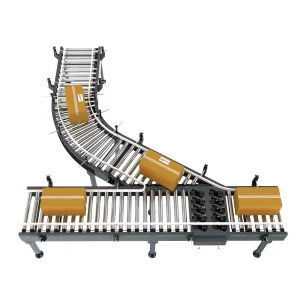
This geographic concentration allows us to compress product development and customization cycles significantly. When a client in Europe or North America requires a custom width for a "Flexible Expandable Gravity Roller Conveyor" or a specific safety layout for an AMR, our engineering team can design, prototype, and test the physical modification within weeks, rather than months.
Furthermore, our rigorous quality control processes align with international standards. We perform full-system integration testing (Factory Acceptance Testing - FAT) before shipping. By simulating the client's actual layout and load profile at our Shenzhen facility, we ensure that on-site installation, commissioning, and integration with the client's local WMS/ERP are executed with minimal downtime.
Get answers to the most common questions regarding warehouse route optimization, hardware integration, and global support.
Browse our full range of dynamic sorting, robotic storage, heavy-duty racking, and automated assembly solutions designed for global logistics environments.
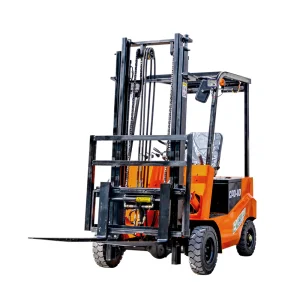
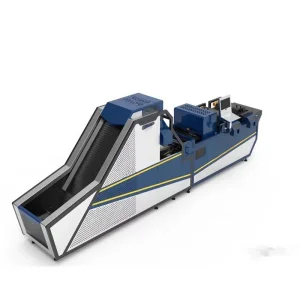
 JK Logistics