Discover our premium manufacturing lines engineered to build robust distribution networks and smart electrical substations serving Mumbai.
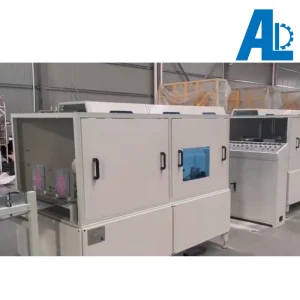
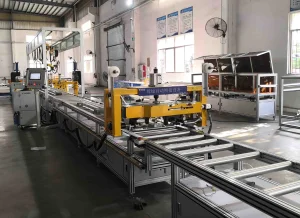
Mumbai, the financial powerhouse of India, exhibits a uniquely complex power distribution ecosystem. Managed by key utility players including Tata Power, Adani Electricity, BEST, and MSEDCL, the metropolitan region demands ultra-reliable grid infrastructure. The high population density, coupled with the annual monsoon heavy rainfall patterns, puts immense stress on standard distribution components. Consequently, there is an aggressive transition toward Distribution Line Automation (DLA).
Local distribution networks are moving rapidly towards smart ring main units (RMUs), automated feeder remote terminal units (FRTUs), and oil-immersed power transformers equipped with highly efficient radiator cooling structures. Modern factories must manufacture these elements using automated production lines to guarantee zero defect rates, absolute standardization, and the ability to withstand harsh environmental stress.
Implementing raw manual processes for critical electrical assets is no longer viable for Mumbai's grid operators. Modern smart grids require precision-welded radiator fin walls, high-efficiency ODF frames for optic-fiber linked SCADA systems, and specialized compact busducts for multi-story residential and commercial high-rises. Our automated machinery ensures that manufacturers supplying the Mumbai market can meet these strict quality criteria.
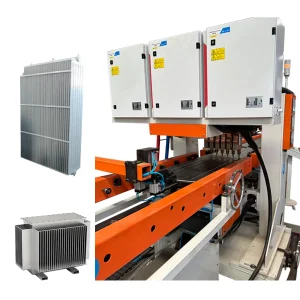
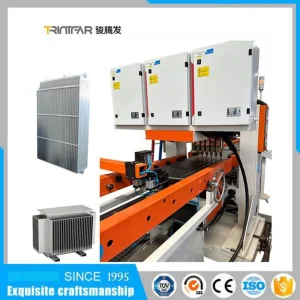
For instance, our Transformer Radiator Fin Automatic Welding Production Line leverages advanced automation to eliminate human error in continuous welding, resulting in leak-proof, highly resilient heat-dissipating units essential for hot and humid coastal climates like Maharashtra. Our production systems establish a seamless, high-yield manufacturing workflow from raw material to tested, utility-grade components.
System Reliability Standard
Continuous Operation Yield
Years Engineering Expertise
IEC & BIS Compliance Match
Understanding the engineering specifications required for distribution line components to qualify for Mumbai's demanding utility guidelines.
| Automation Line Category | Key Process Technologies | Compliance Standard Met | Optimal Utility Target Area (Mumbai) |
|---|---|---|---|
| Transformer Radiator Welding | Pulse-arc multi-spot automatic seam welding | IEC 60076, IS 1180 (Part 1) | MSEDCL & Adani sub-transmission distribution units |
| Compact Busduct Assembly | Automated insulation wrapping & torque fastening | IEC 61439-6, BIS IS 8623 | High-rise commercial clusters in Bandra Kurla Complex (BKC) |
| High-Efficiency ODF Production | Fiber-alignment precision stamping & paint curing | EIA/TIA 568-C, TEC Specifications | Smart-grid SCADA communication networks & data centers |
| Solenoid & Pressure Valves | Leakage decay testing & automated precision assembly | ISO 9001, IEC 60529 (IP67/68) | Gas-insulated Switchgear (GIS) installations & automation panels |
All production assets developed for India are optimized to support local regulations including the Central Electricity Authority (CEA) guidelines, Bureau of Indian Standards (BIS) directives, and the local requirements of the Maharashtra State Electricity Distribution Company.
From anti-corrosive finishing on transformer radiators to airtight IP67-rated valve assemblies, the machinery is engineered to withstand Mumbai's long, humid monsoon seasons, preventing field breakdowns and power outages.
By leveraging advanced automation components sourced directly from Shenzhen's tech cluster, our production lines achieve unmatched speed, technical longevity, and lower initial investment costs than European equivalents.
A key operational hurdle in establishing state-of-the-art manufacturing plants in industrial zones around Mumbai (such as Thane-Belapur, Taloja, and Chakan) is the logistical coordination of large-scale automated machinery. Moving highly sensitive electronic components, heavy sheet-metal stamping lines, and precision welding equipment requires an experienced shipping partner familiar with the complexities of maritime transport, Indian customs clearances, and heavy-cargo logistics.
This is where the specialized capabilities of Shenzhen JK Logistics Co., Ltd. become invaluable. As a veteran in managing material handling systems and heavy industrial machinery transport, JK Logistics provides the necessary bridge between Chinese high-precision equipment factories and Indian distribution line manufacturers. Having a reliable logistics workflow ensures that multi-million dollar investments arrive on schedule, without component degradation due to humidity or improper handling.
In modern smart grids, the word "automation" refers to both the physical energy assets and the data flows controlling them. Automated distribution line switchgear, solid-state relays, and remote monitoring structures require complex electronics. Our customizable HVAC actuator lines, precision valves, and automated assembly equipment provide local Mumbai component builders with the exact tooling needed to manufacture components capable of interacting with next-generation distribution management software (DMS).
With India aiming to integrate vast amounts of renewable energy into its regional grids, maintaining power quality is a critical challenge. Modern automation systems produced on automated welding lines can regulate voltage surges dynamically, ensuring that industrial machinery in places like Navi Mumbai or JNPT Port remains unaffected by grid oscillations.
Robust, field-tested automation systems designed to streamline manufacturing operations across diverse distribution and industrial sectors.
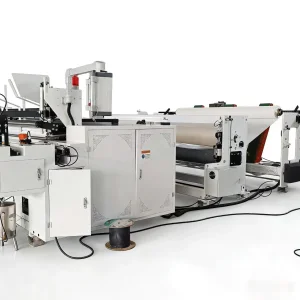
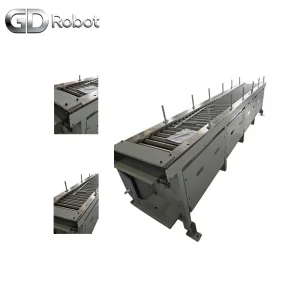
Get clear, expert answers on sourcing, commissioning, and maintaining automated production equipment for the Indian market.
Ensuring seamless flow, transit, and installation of complex automation infrastructure across global industrial corridors.
Shenzhen JK Logistics Co., Ltd. is a professional Warehouse Conveyor Systems Manufacturer specializing in material handling, sorting systems, and logistics automation solutions for modern warehouses, distribution centers, and industrial facilities. Based in Shenzhen, China, the company focuses on the development and production of intelligent automation equipment designed to improve operational efficiency, optimize material flow, and support the growing demands of global supply chains.
With extensive experience in warehouse and logistics automation, JK Logistics provides integrated solutions covering material handling systems, warehouse conveying equipment, automated sorting technologies, order fulfillment automation, pallet handling solutions, distribution center infrastructure, and smart logistics integration. These solutions are widely used in e-commerce fulfillment centers, retail distribution networks, third-party logistics operations, manufacturing facilities, and parcel processing hubs.
The company is committed to delivering reliable, scalable, and customized automation solutions that address the challenges of modern warehousing. Its engineering team collaborates closely with customers to analyze operational requirements, warehouse layouts, throughput objectives, and future expansion plans. By combining automation technology with practical logistics expertise, JK Logistics develops systems that improve productivity, reduce manual handling, enhance accuracy, and streamline warehouse operations.
Equipped with advanced manufacturing capabilities and comprehensive quality management processes, the company maintains strict standards throughout design, production, testing, and installation. Continuous investment in research and development enables JK Logistics to incorporate intelligent control technologies, data-driven automation, and flexible system integration into its solutions.
Serving customers across Asia, Europe, North America, South America, the Middle East, and other international markets, Shenzhen JK Logistics Co., Ltd. is dedicated to providing efficient warehouse conveyor systems and logistics automation solutions that help businesses improve operational performance, increase supply chain efficiency, and adapt to the evolving requirements of modern distribution and fulfillment environments.
 JK Logistics