Explore our industrial-grade warehouse automation and heavy-duty structural racking equipment engineered for global supply chains.
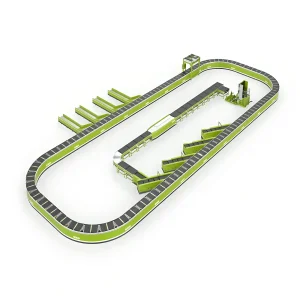
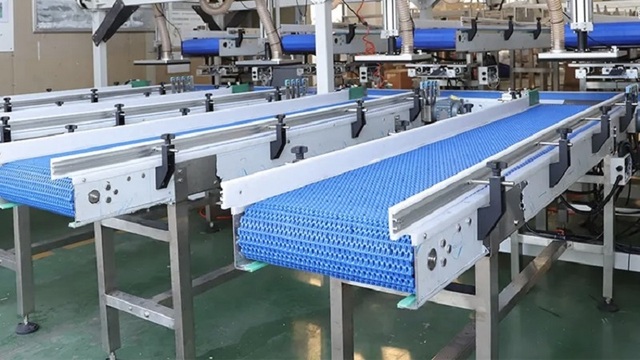
Shenzhen JK Logistics Co., Ltd. is a professional Warehouse Conveyor Systems Manufacturer specializing in material handling, sorting systems, and logistics automation solutions for modern warehouses, distribution centers, and industrial facilities. Based in Shenzhen, China, the company focuses on the development and production of intelligent automation equipment designed to improve operational efficiency, optimize material flow, and support the growing demands of global supply chains.
With extensive experience in warehouse and logistics automation, JK Logistics provides integrated solutions covering material handling systems, warehouse conveying equipment, automated sorting technologies, order fulfillment automation, pallet handling solutions, distribution center infrastructure, and smart logistics integration. These solutions are widely used in e-commerce fulfillment centers, retail distribution networks, third-party logistics operations, manufacturing facilities, and parcel processing hubs.
The company is committed to delivering reliable, scalable, and customized automation solutions that address the challenges of modern warehousing. Its engineering team collaborates closely with customers to analyze operational requirements, warehouse layouts, throughput objectives, and future expansion plans. By combining automation technology with practical logistics expertise, JK Logistics develops systems that improve productivity, reduce manual handling, enhance accuracy, and streamline warehouse operations.
Equipped with advanced manufacturing capabilities and comprehensive quality management processes, the company maintains strict standards throughout design, production, testing, and installation. Continuous investment in research and development enables JK Logistics to incorporate intelligent control technologies, data-driven automation, and flexible system integration into its solutions.
Serving customers across Asia, Europe, North America, South America, the Middle East, and other international markets, Shenzhen JK Logistics Co., Ltd. is dedicated to providing efficient warehouse conveyor systems and logistics automation solutions that help businesses improve operational performance, increase supply chain efficiency, and adapt to the evolving requirements of modern distribution and fulfillment environments.
Understanding shifting procurement paradigms, high-bay verticality requirements, and structural safety standards across global supply chain nodes.
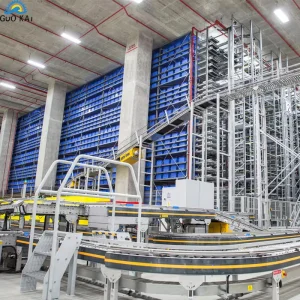
Escalating industrial real estate costs worldwide force logistics operators to move from horizontal floor storage to extreme vertical high-bay architectures. Modern heavy-duty racking systems now reach clear heights exceeding 40 meters when integrated into Rack-Supported Buildings, maximizing cubic foot utilization.
Global procurement teams prioritize structural finite element analysis (FEA). Advanced rack engineering calculates non-linear structural behavior under seismic loading, dynamic sway, and asymmetrical load distribution in accordance with EN 15512, ANSI MH16.1, and AS4084-2012 standards.
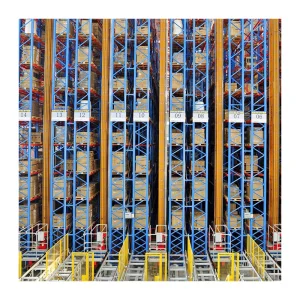
Traditional static pallet storage is rapidly migrating toward hybrid automation-ready infrastructure. Structural uprights and beam profiles must now maintain millimeter-level tolerances to accommodate Autonomous Mobile Robots (AMRs), Automated Storage and Retrieval System (AS/RS) cranes, and high-speed shuttles.
China has established itself as the undisputed manufacturing epicenter for structural cold-rolled steel and industrial racking systems. Leading Chinese OEM/ODM factories leverage fully automated continuous cold-roll forming lines, robotic welding cells, and electrostatic powder coating plants to deliver exceptional structural integrity at highly competitive unit metrics.
Comprehensive technical breakdown of structural configurations tailored for high-density load profiles.
| Racking System Type | Typical Load Capacity | Selectivity Rate | Space Utilization Efficiency | Ideal Application Environment |
|---|---|---|---|---|
| Selective Pallet Racking | 1,000 kg – 4,500 kg / level | 100% Direct Access | 40% – 50% Floor Area | FMCG, High-SKU Distribution Centers, 3PL Facilities |
| Drive-In / Drive-Thru Racking | 1,000 kg – 2,000 kg / pallet | LIFO (Drive-In) / FIFO (Drive-Thru) | 70% – 85% Density | Cold Storage, Bulk Goods, Uniform SKU Manufacturing |
| Push-Back Racking System | 500 kg – 1,500 kg / cart | LIFO (2 to 6 pallets deep) | 65% – 75% Density | Medium-SKU Storage, Staging Zones, Seasonal Products |
| Gravity Pallet Flow Racking | 1,000 kg – 2,500 kg / lane | Strict FIFO System | 75% – 85% Density | Perishable Goods, Pharmaceutical Distribution, High-Throughput Buffers |
| Heavy-Duty Cantilever Racking | 500 kg – 6,000 kg / arm | 100% Linear Access | Variable / Open Length | Steel Tubes, Timber Bundles, Heavy Piping, Sheet Metal |
| AS/RS High-Bay Racking Structures | 500 kg – 3,000 kg / cell | 100% Computerized Access | 85% – 95% Vertical Cube | Smart Factories, Automated Parcel Hubs, Cold Chain Automation |
The most versatile structural design. Features adjustable beam levels with safety locking pins preventing accidental dislodgement. Compatible with standard reach trucks, counterbalanced forklifts, and VNA (Very Narrow Aisle) equipment.
Eliminates operating aisles by allowing forklifts to drive directly into the structural bays. Utilizes continuous top rails and heavy-duty structural arms designed to support intense repeat impacts.
The rack structure forms the load-bearing framework of the warehouse building itself. Walls and roof cladding attach directly to the outer rack uprights, eliminating the need for traditional structural steel building frames.
Bridging physical structural heavy-duty racking with IoT, AI-driven sorting machines, and warehouse management software.
Modern heavy-duty racking is no longer a passive steel frame. Integrated sensor brackets, retro-reflective targets, and barcode/RFID location tags enable real-time tracking of pallet placement via WCS and WMS platforms, ensuring zero inventory discrepancy.
In collaboration with automated sorting machines, cross-belt sorters, and pick-to-light systems, heavy-duty racking serves as the core buffer foundation. Gravity flow lanes feed seamlessly into automated conveyor belts, dramatically accelerating order fulfillment cycles.
Rigorous testing and international engineering compliance guarantee operational safety and long-term durability.
European design codes governing structural steel static pallet racking. Includes limit state design principles, dynamic coefficient calculations, and beam deflection threshold controls ($L/240$).
North American standard for the design, testing, and utilization of industrial steel storage racks, ensuring structural stability under wind, seismic, and accidental impact loads.
Complete quality management system coverage spanning raw material mill test certificates (MTC), ultrasonic weld inspections, coating thickness verification, and post-installation audit checklists.
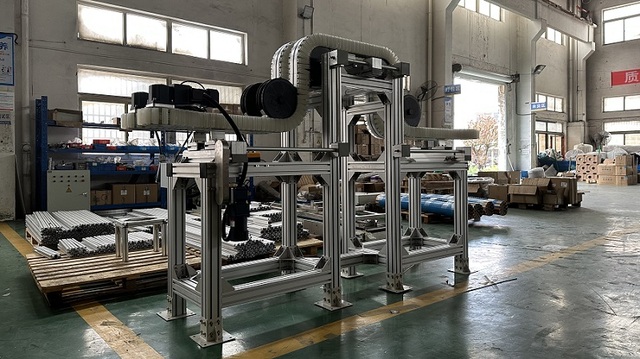
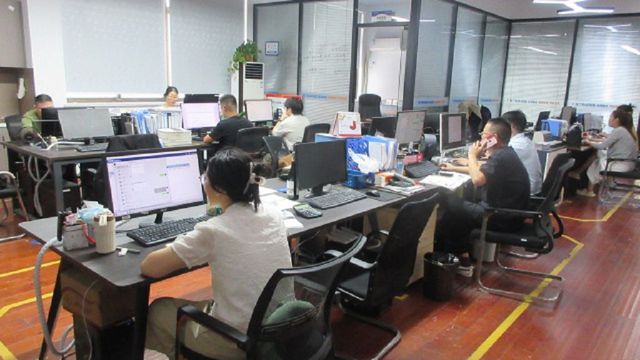
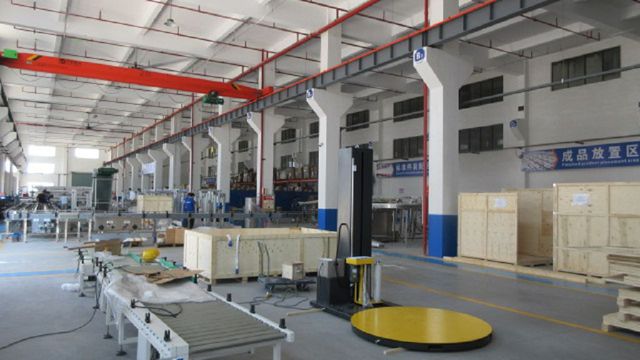
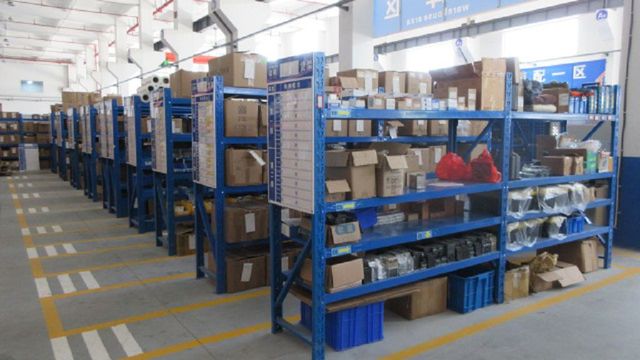
Our structural production process implements strict quality control stops at four key manufacturing checkpoints:
From initial CAD/3D spatial planning to overseas installation supervision and lifecycle maintenance.
Custom floor plan layout, static load calculations, and structural simulation tailored to building slab capabilities.
High-speed automated manufacturing of frames, beams, wire decking, and accessories under strict ISO oversight.
Heavy-duty steel strapping, protective corner guards, moisture-barrier wrapping, and specialized container loading plans.
Dispatch of certified installation engineers, local installation guidance, and final safety load testing approval.
Direct engineering answers to technical procurement queries for modern warehouse directors.
Q235B and Q355B (equivalent to European S235 JR and S355 JR) are the industry benchmarks for heavy-duty racking systems. Q355B high-yield structural steel offers a minimum yield strength of 355 MPa, allowing for thinner structural profiles without sacrificing load-bearing capacity. This translates to lighter overall structural self-weight while maintaining safety factors above 1.5 in structural modeling.
According to FEM 10.2.02 and RMI guidelines, maximum vertical beam deflection under design load must not exceed $L/200$ to $L/300$, where $L$ represents the clear span length of the horizontal beam. For example, on a 2700mm beam, maximum allowable center deflection under full rated load is $2700 / 200 = 13.5\text{ mm}$. Finite Element Analysis (FEA) software simulates these deflection curves during the pre-production engineering phase.
For ambient temperature warehouses, epoxy-polyester powder coating (60–80 microns thickness) provides excellent protection. However, for sub-zero cold storage facilities (-25°C to -30°C) or high-humidity environments, Hot-Dip Galvanization (HDG) per ISO 1461 is highly recommended. HDG applies a zinc coating layer of 60–100 microns that chemically bonds with the steel, preventing rust and hydrogen embrittlement caused by thermal cycling.
Yes. Manufacturing standards for structural racking components are fully harmonized with international dimensions. Punching patterns (50mm, 75mm, 76.2mm pitch) and guide rail profiles can be custom engineered to interface seamlessly with European stacker cranes, AGV optical guide tracks, and shuttle systems from vendors globally.
Typical production lead times for a 10,000-pallet-position heavy-duty racking project range between 25 and 35 calendar days following final CAD drawing sign-off. Shipping duration varies by destination port (e.g., 14-20 days to Europe/US West Coast). Containerization strategy allows concurrent ocean shipping in batches to accelerate onsite installation schedules.
Explore additional robotics, sorting platforms, and industrial machinery systems manufactured by Shenzhen JK Logistics Co., Ltd.

 JK Logistics