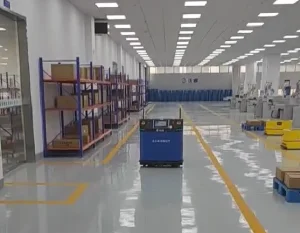
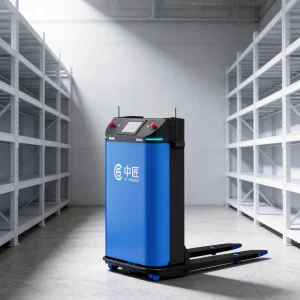
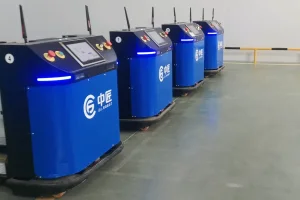
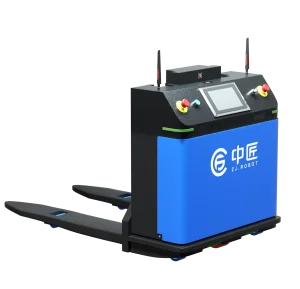
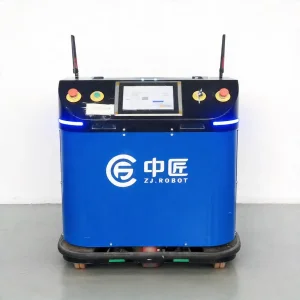
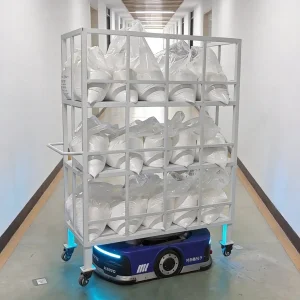
Engineered to streamline logistics efficiency and scale supply chain operations from Johannesburg to Cape Town.
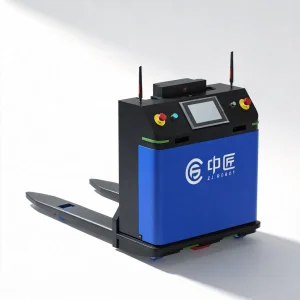
The South African industrial sector is at a critical inflection point. As the second-largest economy on the African continent, South Africa serves as the primary gateway for regional trade through major shipping nodes like the Port of Durban, Port Elizabeth, and Cape Town. However, modern pressures—including fluctuating labor availability, increasing demands for rapid e-commerce shipping, and the national challenge of energy supply stability (load shedding)—have pushed logistics, warehousing, and manufacturing operators to actively seek out intelligent integration options.
By shifting traditional storage layouts into fully integrated robotic environments, South African enterprises can achieve unprecedented levels of throughput and spatial efficiency. Whether dealing with automotive assemblies in Pretoria and Port Elizabeth, FMCG distribution centers in Gauteng, or mining logistics across the North West province, intelligent material handling and automated guided vehicle (AGV) architectures mitigate operational vulnerabilities, stabilizing production and ensuring international delivery deadlines are met.
The technological shift transforming traditional warehouses into smart fulfillment nodes.
Modern AGVs and AMRs have transitioned from physical guidance (magnetic tapes/colored lines) to natural navigation via LiDAR SLAM. This allows real-time map creation, dynamic obstacle avoidance, and rapid route replanning without warehouse layout modifications.
Seamless orchestration requires integrating robotics directly with Warehouse Management Systems (WMS). Real-time telemetry, inventory status updates, and automated dispatch protocols maximize overall equipment effectiveness (OEE).
Industrial robotics must safely coexist alongside human workers. Incorporating triple-redundant safety features—including obstacle-detection scanners, safety bumpers, and emergency manual overrides—guarantees incident-free spaces.
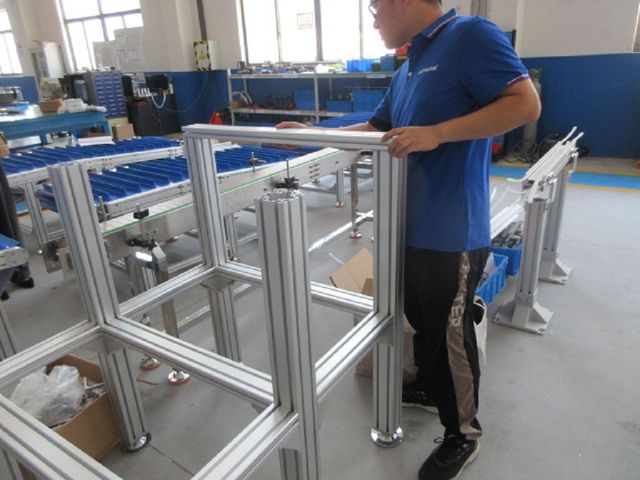
Partnering with a leading manufacturer from China's industrial heartlands, such as Shenzhen JK Logistics Co., Ltd., grants access to a hyper-developed automation ecosystem. Shenzhen's position as a global technology hub allows for rapid prototyping, sourcing of high-grade components (such as precision gearboxes, drive wheels, and advanced electronic controls), and rigorous quality-control benchmarks.
Furthermore, China's robust industrial base yields significant cost-efficiencies and delivery timelines that other regions cannot match. Shenzhen JK Logistics combines high-throughput structural steel manufacturing with smart software control engineering. This dual proficiency delivers AGVs and conveyor lines that are not only robust under extreme workloads but also dynamic enough to evolve alongside changing industrial demands.
How our integrated robotic automation systems optimize specific regional sectors.
Location Focus: Pretoria, Port Elizabeth, East London
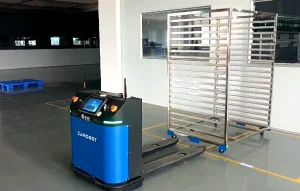
Automotive production lines require heavy-duty AGVs to carry chassis parts, engines, and sub-assemblies. Synchronized conveyor integrations and high-load AGVs transfer materials safely from storage bays to the assembly line, avoiding forklift collisions and reducing component damage.
Location Focus: Durban, Cape Town Port
Agricultural and fast-moving consumer goods (FMCG) require swift, temperature-controlled transit to preserve quality. Intelligent automated sorting lines and conveyor systems handle massive container turnovers, routing shipments efficiently for export or distribution.
Location Focus: Midrand, Johannesburg, Durban
E-commerce demands accurate, unit-level order sorting. Integrating AMR fleets with intelligent high-speed belt sorters enables automated sorting centers to process thousands of parcels per hour, minimizing human errors and boosting throughput.
Shenzhen JK Logistics Co., Ltd. is a professional Warehouse Conveyor Systems Manufacturer specializing in material handling, sorting systems, and logistics automation solutions for modern warehouses, distribution centers, and industrial facilities. Based in Shenzhen, China, the company focuses on the development and production of intelligent automation equipment designed to improve operational efficiency, optimize material flow, and support the growing demands of global supply chains.
With extensive experience in warehouse and logistics automation, JK Logistics provides integrated solutions covering material handling systems, warehouse conveying equipment, automated sorting technologies, order fulfillment automation, pallet handling solutions, distribution center infrastructure, and smart logistics integration. These solutions are widely used in e-commerce fulfillment centers, retail distribution networks, third-party logistics operations, manufacturing facilities, and parcel processing hubs.
The company is committed to delivering reliable, scalable, and customized automation solutions that address the challenges of modern warehousing. Its engineering team collaborates closely with customers to analyze operational requirements, warehouse layouts, throughput objectives, and future expansion plans. By combining automation technology with practical logistics expertise, JK Logistics develops systems that improve productivity, reduce manual handling, enhance accuracy, and streamline warehouse operations.
Equipped with advanced manufacturing capabilities and comprehensive quality management processes, the company maintains strict standards throughout design, production, testing, and installation. Continuous investment in research and development enables JK Logistics to incorporate intelligent control technologies, data-driven automation, and flexible system integration into its solutions.
Serving customers across Asia, Europe, North America, South America, the Middle East, and other international markets, Shenzhen JK Logistics Co., Ltd. is dedicated to providing efficient warehouse conveyor systems and logistics automation solutions that help businesses improve operational performance, increase supply chain efficiency, and adapt to the evolving requirements of modern distribution and fulfillment environments.
Heavy-duty transport solutions, smart AGVs, and intelligent conveyor systems for global logistics operations.

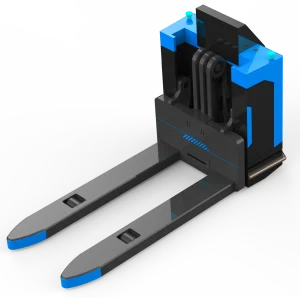
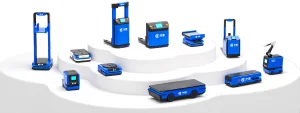
Other High-Performance Systems Available:
Integrating robotic warehouse solutions requires precise engineering across multiple operational layers. To ensure that our exported systems perform under high stress and varying electrical constraints in South Africa, each system is constructed around four critical pillars:
Given the energy security challenges in Southern Africa, our AGVs are configured with high-capacity Lithium Iron Phosphate (LiFePO4) batteries and automated opportunity charging. Systems can run continuously during operational shifts by pulling up to charging stations during natural lulls in work dispatch, preventing complete power drainage and maintaining automation uptime even during loadshedding periods when grid backups are stabilizing.
Conveyor components, sorting units, and mobile chassis frames are built with high-tensile structural steel profiles. Heavy-load AGV configurations support weights up to 5,000kg, engineered with high-friction polyurethane wheels, heavy-duty suspension mechanisms, and industrial gear units to withstand the concrete floor variances found in aging storage hubs.
Our fleet control management system communicates seamlessly with major Enterprise Resource Planning (ERP) and WMS software via RESTful APIs and OPC UA protocols. The integrated traffic management system coordinates pathing commands for multi-agent AGV fleets, ensuring that robots pass one another safely, manage cross-docking priorities, and dispatch to order fulfillment lanes efficiently.
Answering crucial technical and logistical queries about robotic deployments in South Africa.
Our automation systems utilize fast-charging LiFePO4 batteries designed to run efficiently alongside backup generators or industrial solar infrastructure. Additionally, system states and current mission paths are recorded locally in non-volatile flash memory, meaning if a sudden power cutoff occurs, the AGVs immediately go into a safe lock-state and resume missions seamlessly once generators start up.
Typically, South African operators see a full return on investment (ROI) within 18 to 28 months. This timeline is driven by reduced damage to products, continuous operation capability, optimized floor-space utilization (which reduces the need to lease extra space), and major improvements in sorting speed at major regional hubs.
We provide full bespoke layouts. Our engineering department can adapt conveyor structures, belt sorter lengths, diverter points, and AGV payload configurations to match your warehouse's specific geometry and overhead height constraints. We simulate the workflow prior to shipping to ensure immediate physical alignment upon arrival.
We manage the complete supply chain process from our production facility in Shenzhen directly to major South African ports. Equipment is packaged in heavy-duty ocean-freight crates to prevent salt-air corrosion. Upon arrival, we coordinate remote commissioning with local integration partners or dispatch field technicians to supervise assembly, safety configuration, and WMS linkage.
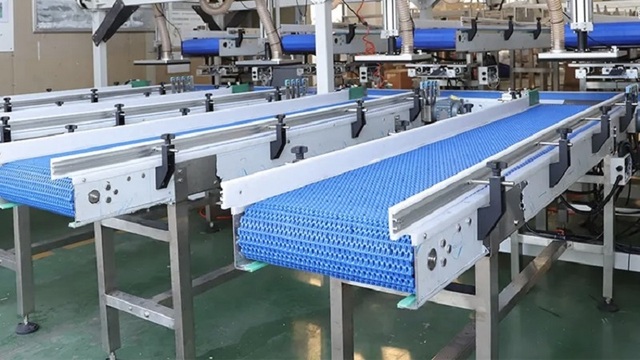
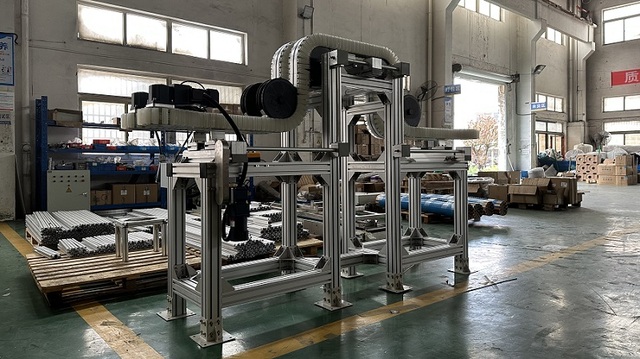
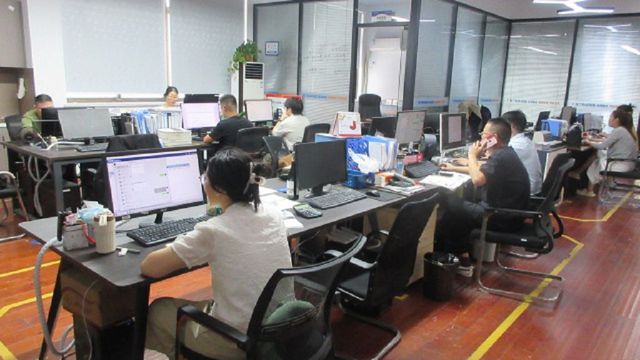
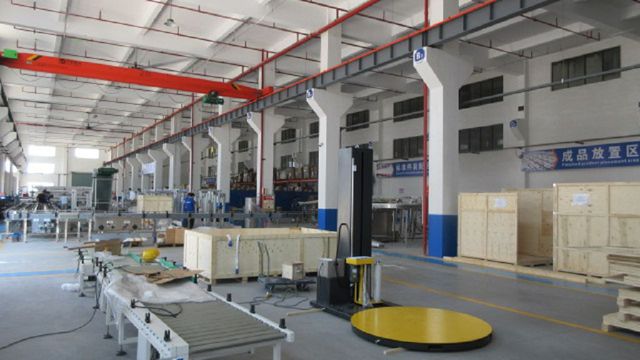
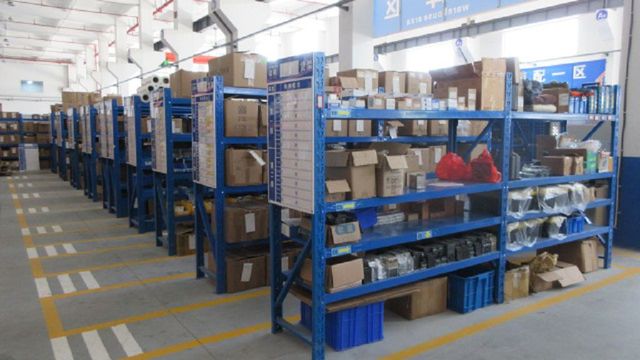
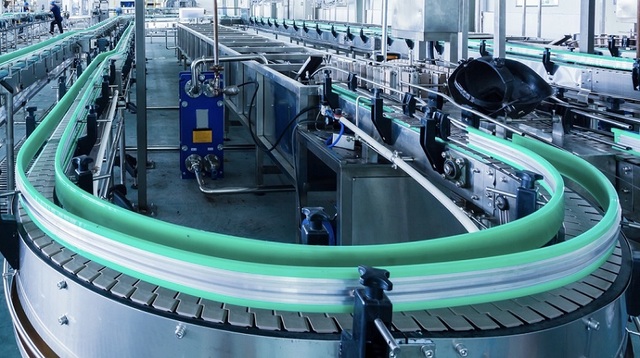
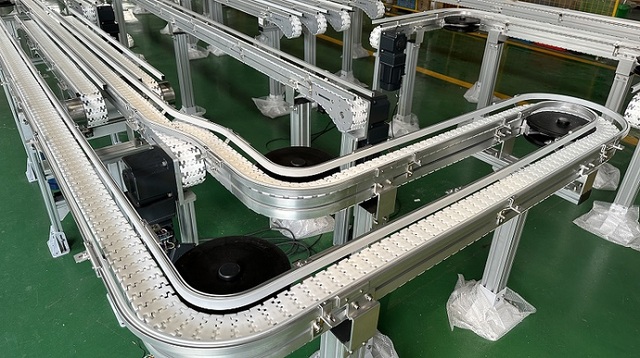
Rigorous manufacturing standards, structural test fields, and packing systems.
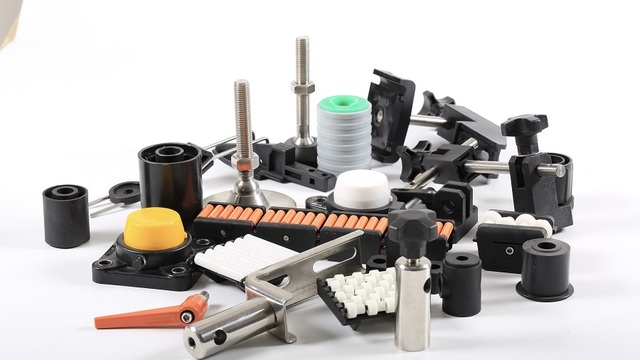

Connect with our integration engineering team to schedule a custom layout evaluation and secure your logistics pipeline.
 JK Logistics